


The Geopolitics of AI: China’s WAICO Push and India’s BRICS Standing
July 27, 2026
Identifying Appropriate Technology for Different Stages of Elections | Dr. D. Dhanuraj | International Conference on Model Standards for Election Technology
August 5, 2026Why India’s Rigid Bus Standards Are Killing Transport Innovation
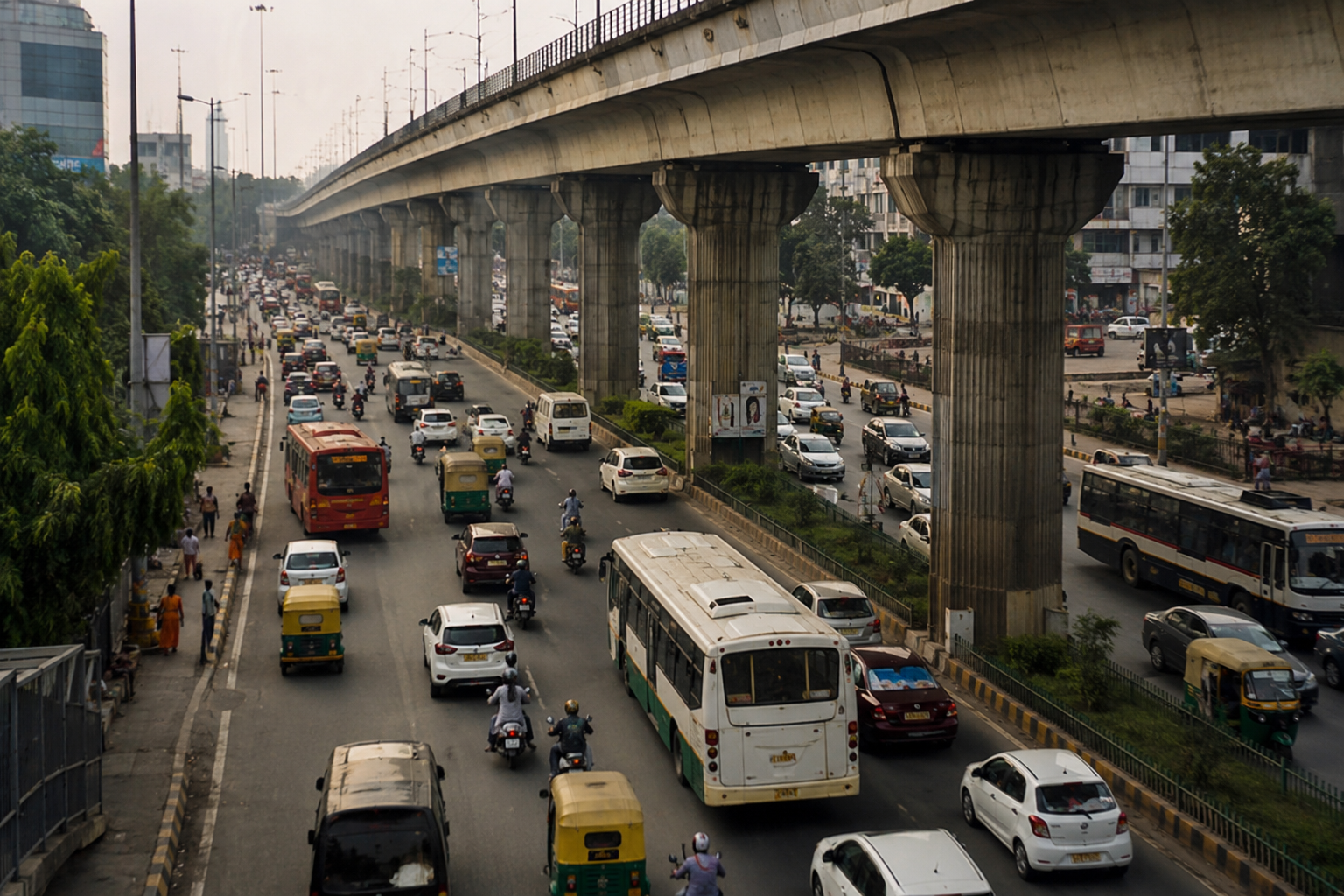
India’s cities are growing faster than their public transport systems can keep up. Private bus operators have stepped in, often with genuine intent to offer better, differentiated services, but the regulatory architecture treats innovation not as an opportunity but as a liability.
Buses remain the most accessible and cost-effective mode of urban mobility, yet private operators who have the appetite to innovate and the agility to respond to passenger needs find themselves constrained at every turn by the Motor Vehicles Act (MVA), a regulatory framework that has traces to 1914 and whose fundamental architecture has not meaningfully evolved despite successive legislative updates in 1939, 1988, and 2019. The result is a bus system frozen in time, in cities that are anything but expanding.
In India, hyper-standardization, driven by the Motor Vehicles Act and the Automotive Industry Standards (AIS), has created an environment where compliance actively suppresses customer-centric innovation in the bus industry.
The Homologation hurdle & the MV Act
To understand the bottleneck, one must look at the legal framework governing vehicle modifications. Section 52 of the Motor Vehicles Act, 1988, clearly states: “No owner of a motor vehicle shall so alter the vehicle that the particulars contained in the certificate of registration are at variance with those originally specified by the manufacturer.”
In practice, this means a vehicle must remain exactly as it was when it received its homologation certificate from testing agencies like the Automotive Research Association of India (ARAI) or the Central Institute of Road Transport (CIRT). Homologation is an exhaustive, expensive process designed to ensure that a vehicle prototype meets all safety, structural, and environmental standards.
The most significant barrier to spatial innovation is the AIS-052 standard, commonly known as the Bus Body Code. First drafted in 2001 and finally strictly enforced across the country by 2017 after years of industry pushback, the code was introduced to regulate a previously unorganized and often wildly unsafe local bus body-building market. It prescribes rigid dimensions for seat pitches, aisle widths, window sizes, and emergency exit placements. The latest 2025 mandate for the Bus Body Code (enforcing AIS-052 and AIS-153) is exceptionally rigid as it eliminates self-certification and dictates non-negotiable, millimeter-exact dimensions for every cabin feature, from seat pitches to aisle widths.
The industry’s assessment and experience over the last several years reveal a double-edged sword: the code operates as a prescriptive straightjacket. Because Indian regulation fails to separate a vehicle’s structural safety from its internal cabin configuration, every minor design change triggers a rigorous, highly expensive re-approval process. When strictly enforced, this homologation trap temporarily paralyzed the market, halting new bus registrations in several states while dramatically driving up capital costs and forcing smaller builders out of business. Today, it actively suppresses customer-centric innovation. Because every design choice, whether safety-critical or not, is locked into the same inflexible approval architecture, operators who want to experiment with flexible seating or premium interiors are left with little more than a choice of paint colour.
Because homologation is tied to a highly specific, static design, operators cannot iterate. An OEM homologates a 40-seater layout. If a private operator buys that chassis and wants to alter the interior to offer a differentiated service, they enter a legal minefield. Consider a private operator who wants to cater to the growing demographic of active, eco-conscious travelers by introducing a “Multi-Modal Commute” bus. The operator wants to remove the last two rows of seats and install a dedicated, secure racking system for passengers to bring their bicycles.
From a design and market-demand perspective, this is a brilliant innovation. From an Indian regulatory perspective, it is effectively illegal without moving mountains.
- Capacity Violation: Removing seats alters the seating capacity mentioned on the Registration Certificate (RC). Modifying an RC requires RTO (Regional Transport Office) approval, which is frequently denied for non-standard layouts.
- Taxation Trap: Bus taxation in many Indian states is calculated per seat. Altering the seating capacity to carry freight (bicycles) blurs the line between a passenger stage carriage and a goods vehicle, inviting severe tax penalties and permit violations.
- Structural Red Tape: Under AIS-052, floor space is strictly zoned. You cannot arbitrarily designate a passenger zone as a cargo zone without proving that the mounting hardware for the bicycles won’t alter the vehicle’s centre of gravity.
The consequence is that potentially useful service innovations never get tested.
An equally significant constraint operates upstream, at the level of what vehicle types are available in India in the first place. An operator cannot simply import or commission a purpose-built hybrid-use vehicle because no compliant regulatory category exists for it to be registered into. The permit architecture: stage carriage, contract carriage, goods vehicle, does not accommodate designs that blur these lines. An OEM considering a purpose-built multi-modal or cargo-passenger hybrid vehicle faces the full homologation burden for an entirely new vehicle class, with no guarantee that state RTOs will even have a permit category to register it under. The commercial incentive to invest simply does not exist.
The core issue lies in how the law enforces a strict, unyielding binary between passenger and commercial transport. Under Section 2(14) of the 1988 Act, a “goods carriage” is defined not just as a vehicle built specifically for goods but, crucially, as any motor vehicle when it is used for carrying commercial cargo. The implication is that once a passenger bus carries commercial cargo, such as e-commerce parcels or bicycles, it legally becomes a “goods carriage.” Because the law refuses to recognize a mixed-use category, it forces a vehicle to be exclusively a passenger bus or a goods truck, but never both.
This regulatory straitjacket explains why different, versatile types of vehicles are completely absent from the Indian market. The barrier stops innovation before a vehicle even leaves the factory floor. An OEM is legally paralyzed; they cannot design, build, and sell a purpose-built passenger-cargo hybrid bus simply because there is no legal category under which such a vehicle can be homologated or registered.
This rigid framework stands in stark contrast to the global experience. Across Europe and parts of Asia, vehicle regulation is performance-based rather than definitional. Global transport authorities readily certify “combi” or mixed-use vehicles, focusing on structural integrity and secure cargo partitions, rather than rigidly policing the nature of the payload. Much like global aviation regulations, which certify an aircraft’s structural safety while allowing airlines the flexibility to configure the cabin, international automotive standards separate vehicle safety from interior utility. By clinging to an 85-year-old definitional binary, India remains a regulatory anomaly, actively obstructing the market from building the flexible, modern mobility solutions our cities need.
What Needs to Change
India’s regulatory process must distinguish between standards that protect passengers and standards that merely entrench manufacturing convention. To achieve this, India must pivot to performance-based approvals, prioritizing actual safety outcomes over rigid design checklists, and introduce a fast-track pathway for non-structural upgrades like flexible seating.
India’s private bus operators are expected to meet twenty-first-century mobility demands under a regulatory framework designed for a different era. Incremental fleet additions alone will not bridge the gap between what cities need and what bus systems deliver. Modernizing bus transport requires moving beyond legacy rulebooks toward regulation that enables innovation rather than constrains it.
Lizbeth Godwin is a consultant.
Views expressed by the authors are personal and need not reflect or represent the views of the Centre for Public Policy Research (CPPR).

- CPPR Media&PR
- CPPR Media&PR
- CPPR Media&PR
- CPPR Media&PR
- CPPR Media&PR
- CPPR Media&PR
- CPPR Media&PR
- CPPR Media&PR
- CPPR Media&PR
- CPPR Media&PR
- CPPR Media&PR
- CPPR Media&PR
- CPPR Media&PR
- CPPR Media&PR
- CPPR Media&PR
- CPPR Media&PR
- CPPR Media&PR
- CPPR Media&PR
- CPPR Media&PR
- CPPR Media&PR
- CPPR Media&PR
- CPPR Media&PR
- CPPR Media&PR
- CPPR Media&PR
- CPPR Media&PR
- CPPR Media&PR
- CPPR Media&PR
- CPPR Media&PR
- CPPR Media&PR
- CPPR Media&PR
- CPPR Media&PR
- CPPR Media&PR
- CPPR Media&PR
- CPPR Media&PR
- CPPR Media&PR
- CPPR Media&PR
- CPPR Media&PR
- CPPR Media&PR
- CPPR Media&PR
- CPPR Media&PR
- CPPR Media&PR
- CPPR Media&PR
- CPPR Media&PR
- CPPR Media&PR
- CPPR Media&PR
- CPPR Media&PR
- CPPR Media&PR
- CPPR Media&PR
- CPPR Media&PR
- CPPR Media&PR
- CPPR Media&PR
- CPPR Media&PR
- CPPR Media&PR
- CPPR Media&PR
- CPPR Media&PR
- CPPR Media&PR
- CPPR Media&PR
- CPPR Media&PR
- CPPR Media&PR
- CPPR Media&PR
- CPPR Media&PR
- CPPR Media&PR
- CPPR Media&PR
- CPPR Media&PR
- CPPR Media&PR
- CPPR Media&PR
- CPPR Media&PR
- CPPR Media&PR
- CPPR Media&PR
- CPPR Media&PR
- CPPR Media&PR
- CPPR Media&PR
- CPPR Media&PR
- CPPR Media&PR
- CPPR Media&PR
- CPPR Media&PR
- CPPR Media&PR
- CPPR Media&PR
- CPPR Media&PR
- CPPR Media&PR
- CPPR Media&PR
- CPPR Media&PR
- CPPR Media&PR
- CPPR Media&PR
- CPPR Media&PR
- CPPR Media&PR
- CPPR Media&PR
- CPPR Media&PR
- CPPR Media&PR
- CPPR Media&PR
- CPPR Media&PR
- CPPR Media&PR
- CPPR Media&PR
- CPPR Media&PR
- CPPR Media&PR
- CPPR Media&PR
- CPPR Media&PR
- CPPR Media&PR
- CPPR Media&PR
- CPPR Media&PR
- CPPR Media&PR
- CPPR Media&PR
- CPPR Media&PR
- CPPR Media&PR
- CPPR Media&PR
- CPPR Media&PR
- CPPR Media&PR
- CPPR Media&PR
- CPPR Media&PR
- CPPR Media&PR
- CPPR Media&PR
- CPPR Media&PR
- CPPR Media&PR
- CPPR Media&PR
- CPPR Media&PR
- CPPR Media&PR
- CPPR Media&PR
- CPPR Media&PR
- CPPR Media&PR
- CPPR Media&PR
- CPPR Media&PR
- CPPR Media&PR
- CPPR Media&PR
- CPPR Media&PR
- CPPR Media&PR
- CPPR Media&PR
- CPPR Media&PR
- CPPR Media&PR
- CPPR Media&PR
- CPPR Media&PR
- CPPR Media&PR
- CPPR Media&PR
- CPPR Media&PR
- CPPR Media&PR
- CPPR Media&PR
- CPPR Media&PR
- CPPR Media&PR
- CPPR Media&PR
- CPPR Media&PR
- CPPR Media&PR
- CPPR Media&PR
- CPPR Media&PR
- CPPR Media&PR
- CPPR Media&PR
- CPPR Media&PR
- CPPR Media&PR
- CPPR Media&PR
- CPPR Media&PR
- CPPR Media&PR
- CPPR Media&PR
- CPPR Media&PR
- CPPR Media&PR
- CPPR Media&PR
- CPPR Media&PR
- CPPR Media&PR
- CPPR Media&PR
- CPPR Media&PR
- CPPR Media&PR
- CPPR Media&PR
- CPPR Media&PR
- CPPR Media&PR
- CPPR Media&PR
- CPPR Media&PR
- CPPR Media&PR
- CPPR Media&PR
- CPPR Media&PR
- CPPR Media&PR
- CPPR Media&PR
- CPPR Media&PR
- CPPR Media&PR
- CPPR Media&PR
- CPPR Media&PR
- CPPR Media&PR
- CPPR Media&PR
- CPPR Media&PR
- CPPR Media&PR
- CPPR Media&PR
- CPPR Media&PR
- CPPR Media&PR
- CPPR Media&PR
- CPPR Media&PR
- CPPR Media&PR
- CPPR Media&PR
- CPPR Media&PR
- CPPR Media&PR
- CPPR Media&PR
- CPPR Media&PR
- CPPR Media&PR
- CPPR Media&PR
- CPPR Media&PR
- CPPR Media&PR
- CPPR Media&PR
- CPPR Media&PR
- CPPR Media&PR
- CPPR Media&PR
- CPPR Media&PR
- CPPR Media&PR
- CPPR Media&PR
- CPPR Media&PR
- CPPR Media&PR
- CPPR Media&PR
- CPPR Media&PR
- CPPR Media&PR
- CPPR Media&PR
- CPPR Media&PR
- CPPR Media&PR
- CPPR Media&PR
- CPPR Media&PR
- CPPR Media&PR
- CPPR Media&PR
- CPPR Media&PR
- CPPR Media&PR
- CPPR Media&PR
- CPPR Media&PR
- CPPR Media&PR
- CPPR Media&PR
- CPPR Media&PR
- CPPR Media&PR
- CPPR Media&PR
- CPPR Media&PR
- CPPR Media&PR
- CPPR Media&PR
- CPPR Media&PR
- CPPR Media&PR
- CPPR Media&PR
- CPPR Media&PR
- CPPR Media&PR
- CPPR Media&PR
- CPPR Media&PR
- CPPR Media&PR
- CPPR Media&PR
- CPPR Media&PR
- CPPR Media&PR
- CPPR Media&PR
- CPPR Media&PR
- CPPR Media&PR
- CPPR Media&PR
- CPPR Media&PR
- CPPR Media&PR
- CPPR Media&PR
- CPPR Media&PR
- CPPR Media&PR
- CPPR Media&PR
- CPPR Media&PR
- CPPR Media&PR
- CPPR Media&PR
- CPPR Media&PR
- CPPR Media&PR
- CPPR Media&PR
- CPPR Media&PR
- CPPR Media&PR
- CPPR Media&PR
- CPPR Media&PR
- CPPR Media&PR
- CPPR Media&PR
- CPPR Media&PR
- CPPR Media&PR
- CPPR Media&PR
- CPPR Media&PR
- CPPR Media&PR
- CPPR Media&PR
- CPPR Media&PR
- CPPR Media&PR
- CPPR Media&PR
- CPPR Media&PR
- CPPR Media&PR
- CPPR Media&PR
- CPPR Media&PR
- CPPR Media&PR
- CPPR Media&PR
- CPPR Media&PR
- CPPR Media&PR
- CPPR Media&PR
- CPPR Media&PR
- CPPR Media&PR
- CPPR Media&PR
- CPPR Media&PR
- CPPR Media&PR
- CPPR Media&PR
- CPPR Media&PR
- CPPR Media&PR
- CPPR Media&PR
- CPPR Media&PR
- CPPR Media&PR
- CPPR Media&PR
- CPPR Media&PR
- CPPR Media&PR
- CPPR Media&PR
- CPPR Media&PR
- CPPR Media&PR
- CPPR Media&PR
- CPPR Media&PR
- CPPR Media&PR
- CPPR Media&PR
- CPPR Media&PR
- CPPR Media&PR
- CPPR Media&PR
- CPPR Media&PR
- CPPR Media&PR
- CPPR Media&PR
- CPPR Media&PR
- CPPR Media&PR
- CPPR Media&PR
- CPPR Media&PR
- CPPR Media&PR
- CPPR Media&PR
- CPPR Media&PR
- CPPR Media&PR
- CPPR Media&PR
- CPPR Media&PR
- CPPR Media&PR
- CPPR Media&PR
- CPPR Media&PR
- CPPR Media&PR
- CPPR Media&PR
- CPPR Media&PR
- CPPR Media&PR
- CPPR Media&PR
- CPPR Media&PR
- CPPR Media&PR
- CPPR Media&PR
- CPPR Media&PR
- CPPR Media&PR
- CPPR Media&PR
- CPPR Media&PR
- CPPR Media&PR
- CPPR Media&PR
- CPPR Media&PR
- CPPR Media&PR
- CPPR Media&PR
- CPPR Media&PR
- CPPR Media&PR
- CPPR Media&PR
- CPPR Media&PR
- CPPR Media&PR
- CPPR Media&PR
- CPPR Media&PR
- CPPR Media&PR
- CPPR Media&PR
- CPPR Media&PR
- CPPR Media&PR
- CPPR Media&PR
- CPPR Media&PR
- CPPR Media&PR
- CPPR Media&PR
- CPPR Media&PR
- CPPR Media&PR
- CPPR Media&PR
- CPPR Media&PR
- CPPR Media&PR
- CPPR Media&PR
- CPPR Media&PR
- CPPR Media&PR
- CPPR Media&PR
- CPPR Media&PR
- CPPR Media&PR
- CPPR Media&PR
- CPPR Media&PR
- CPPR Media&PR
- CPPR Media&PR
- CPPR Media&PR
- CPPR Media&PR
- CPPR Media&PR
- CPPR Media&PR
- CPPR Media&PR
- CPPR Media&PR
- CPPR Media&PR
- CPPR Media&PR
- CPPR Media&PR
- CPPR Media&PR
- CPPR Media&PR
- CPPR Media&PR
- CPPR Media&PR
- CPPR Media&PR
- CPPR Media&PR
- CPPR Media&PR
- CPPR Media&PR
- CPPR Media&PR
- CPPR Media&PR
- CPPR Media&PR
- CPPR Media&PR
- CPPR Media&PR
- CPPR Media&PR
- CPPR Media&PR
- CPPR Media&PR
- CPPR Media&PR
- CPPR Media&PR
- CPPR Media&PR
- CPPR Media&PR
- CPPR Media&PR
- CPPR Media&PR
- CPPR Media&PR
- CPPR Media&PR
- CPPR Media&PR
- CPPR Media&PR
- CPPR Media&PR
- CPPR Media&PR
- CPPR Media&PR
- CPPR Media&PR
- CPPR Media&PR
- CPPR Media&PR
- CPPR Media&PR
- CPPR Media&PR
- CPPR Media&PR
- CPPR Media&PR
- CPPR Media&PR
- CPPR Media&PR
- CPPR Media&PR
- CPPR Media&PR
- CPPR Media&PR
- CPPR Media&PR
- CPPR Media&PR
- CPPR Media&PR
- CPPR Media&PR
- CPPR Media&PR
- CPPR Media&PR
- CPPR Media&PR
- CPPR Media&PR
- CPPR Media&PR
- CPPR Media&PR
- CPPR Media&PR
- CPPR Media&PR
- CPPR Media&PR
- CPPR Media&PR
- CPPR Media&PR
- CPPR Media&PR
- CPPR Media&PR
- CPPR Media&PR
- CPPR Media&PR
- CPPR Media&PR
- CPPR Media&PR
- CPPR Media&PR
- CPPR Media&PR
- CPPR Media&PR
- CPPR Media&PR
- CPPR Media&PR
- CPPR Media&PR
- CPPR Media&PR
- CPPR Media&PR
- CPPR Media&PR
- CPPR Media&PR
- CPPR Media&PR
- CPPR Media&PR
- CPPR Media&PR
- CPPR Media&PR
- CPPR Media&PR
- CPPR Media&PR
- CPPR Media&PR
- CPPR Media&PR
- CPPR Media&PR
- CPPR Media&PR
- CPPR Media&PR
- CPPR Media&PR
- CPPR Media&PR
- CPPR Media&PR
- CPPR Media&PR
- CPPR Media&PR
