


Disruptions in the Hormuz Strait and the Future of Oil Trade
March 6, 2026
The XVI Finance Commission – Putting India’s Urban Future and Urban Local Governments in the Forefront
March 9, 2026Violence Against Women in India: Rethinking Institutional Responses and Accountability
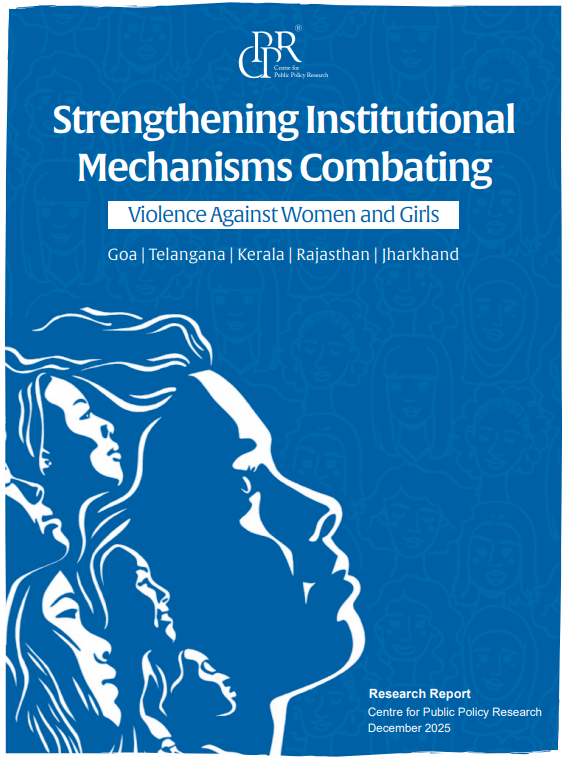
The 2025 research report, Violence Against Women and Girls: Strengthening Institutional Mechanisms Combating, published by the Centre for Public Policy Research (CPPR), presents a comprehensive multi-state analysis of the legal and institutional frameworks addressing violence against women and girls (VAWG) in India. The study focuses on five states: Kerala, Telangana, Goa, Rajasthan, and Jharkhand. It examines how existing systems function from a survivor-centric perspective and evaluates their effectiveness in supporting the achievement of Sustainable Development Goal 5 on Gender Equality.
By analysing institutional responses across police systems, healthcare services, judicial processes, and community-level mechanisms, the report seeks to understand whether existing frameworks translate legal commitments into meaningful protection, access to justice, and long-term support for survivors.
The Grim Reality: Data and Implementation Gaps
Despite the presence of an extensive legislative framework, national data reveal persistent structural and institutional gaps in addressing violence against women.
Escalating Crimes:
According to the National Crime Records Bureau (NCRB), India recorded 445,256 reported crimes against women in 2022, with cruelty by husband or relatives constituting the largest category at 31.8 per cent of all cases.
The Conviction Gap:
A significant gap persists between case registration and justice delivery. For instance, while Telangana reports a charge-sheeting rate of 87.6 per cent, the conviction rate remains as low as 12 per cent, reflecting delays, evidentiary challenges, and systemic bottlenecks in judicial processes.
Institutional Apathy:
Survivors frequently encounter secondary victimisation when interacting with institutional systems. Patriarchal attitudes and insufficient gender-sensitive training among police personnel, healthcare professionals, and judicial actors often discourage reporting and weaken survivor confidence in formal mechanisms.
Resource Inefficiency:
Funding constraints and administrative delays further weaken institutional responses. Across 35 major projects funded under the Nirbhaya Fund, only 33 per cent of the sanctioned funds have been utilised, resulting in operational backlogs, infrastructure gaps, and delays in staff payments.
Strategic Analytical Framework: 3P + 2R + C
To assess institutional responses more comprehensively, the report adopts an expanded analytical framework that builds on the conventional 3P model of violence prevention and response.
Prevention:
Identifying community-level vulnerabilities and strengthening awareness programmes that actively engage men and boys in addressing gender-based violence.
Protection:
Ensuring accessible and functional One Stop Centres (OSCs), safe shelters, and responsive protection services for survivors.
Prosecution:
Examining delays in judicial processes, weaknesses in evidence management, and the challenges of witness protection and intimidation.
Rehabilitation:
Providing immediate and coordinated access to medical treatment, legal assistance, and mental health support services.
Reintegration:
A frequently neglected dimension, reintegration focuses on long-term recovery, including livelihood support, re-enrolment in education, and safeguards against discrimination.
Coordination and Governance:
Addressing fragmentation across departments and institutions by strengthening accountability mechanisms, improving data sharing, and ensuring transparent financial management.
Key Policy Recommendations
The report proposes a set of institutional reforms designed to strengthen both national and state-level responses to violence against women and girls.
Establish “Nirbhaya Saathis”:
Create a grassroots cadre of trained women at the gram panchayat and ward levels who can serve as trusted first responders. These actors would help bridge the gap between survivors and state institutions by facilitating reporting, referrals, and access to services.
Form State-Level Women Safety Boards:
Establish dedicated multi-sectoral bodies responsible for coordinating policies, monitoring budgets, and overseeing grievance redressal across departments such as police, health, and education.
Deploy Integrated VAWG Dashboards:
Introduce state-level digital management information systems (MIS) with unique survivor identification numbers to enable real-time case tracking, reduce duplication of services, and improve institutional coordination.
Enact Technology-Specific Laws:
Develop legislative provisions addressing emerging forms of digital violence, including AI-enabled deepfakes, doxxing, and cyberstalking, which remain inadequately addressed under the current Information Technology Act.
Mandate Frontline Training:
Institutionalise biannual trauma-informed training for frontline responders, including police officers, medical personnel, and staff at One Stop Centres. Training frameworks should also incorporate self-care and burnout prevention for service providers.
Increase Women’s Representation in Policing:
Strengthen efforts to increase women’s participation in police forces to 33 per cent, with a long-term goal of 50 per cent representation, in order to improve reporting rates and enhance survivor trust in law enforcement institutions.
Conclusion
Addressing violence against women and girls requires moving beyond reactive, scheme-based interventions toward a coordinated and survivor-centred institutional ecosystem. Strengthening accountability mechanisms, improving inter-departmental coordination, and investing in long-term rehabilitation and reintegration are essential to ensuring that legal protections translate into tangible safety and justice for women and girls across India.
Views expressed by the authors are personal and need not reflect or represent the views of the Centre for Public Policy Research.
- CPPR Media&PR
- CPPR Media&PR
- CPPR Media&PR
- CPPR Media&PR
- CPPR Media&PR
- CPPR Media&PR
- CPPR Media&PR
- CPPR Media&PR
- CPPR Media&PR
- CPPR Media&PR
- CPPR Media&PR
- CPPR Media&PR
- CPPR Media&PR
- CPPR Media&PR
- CPPR Media&PR
- CPPR Media&PR
- CPPR Media&PR
- CPPR Media&PR
- CPPR Media&PR
- CPPR Media&PR
- CPPR Media&PR
- CPPR Media&PR
- CPPR Media&PR
- CPPR Media&PR
- CPPR Media&PR
- CPPR Media&PR
- CPPR Media&PR
- CPPR Media&PR
- CPPR Media&PR
- CPPR Media&PR
- CPPR Media&PR
- CPPR Media&PR
- CPPR Media&PR
- CPPR Media&PR
- CPPR Media&PR
- CPPR Media&PR
- CPPR Media&PR
- CPPR Media&PR
- CPPR Media&PR
- CPPR Media&PR
- CPPR Media&PR
- CPPR Media&PR
- CPPR Media&PR
- CPPR Media&PR
- CPPR Media&PR
- CPPR Media&PR
- CPPR Media&PR
- CPPR Media&PR
- CPPR Media&PR
- CPPR Media&PR
- CPPR Media&PR
- CPPR Media&PR
- CPPR Media&PR
- CPPR Media&PR
- CPPR Media&PR
- CPPR Media&PR
- CPPR Media&PR
- CPPR Media&PR
- CPPR Media&PR
- CPPR Media&PR
- CPPR Media&PR
- CPPR Media&PR
- CPPR Media&PR
- CPPR Media&PR
- CPPR Media&PR
- CPPR Media&PR
- CPPR Media&PR
- CPPR Media&PR
- CPPR Media&PR
- CPPR Media&PR
- CPPR Media&PR
- CPPR Media&PR
- CPPR Media&PR
- CPPR Media&PR
- CPPR Media&PR
- CPPR Media&PR
- CPPR Media&PR
- CPPR Media&PR
- CPPR Media&PR
- CPPR Media&PR
- CPPR Media&PR
- CPPR Media&PR
- CPPR Media&PR
- CPPR Media&PR
- CPPR Media&PR
- CPPR Media&PR
- CPPR Media&PR
- CPPR Media&PR
- CPPR Media&PR
- CPPR Media&PR
- CPPR Media&PR
- CPPR Media&PR
- CPPR Media&PR
- CPPR Media&PR
- CPPR Media&PR
- CPPR Media&PR
- CPPR Media&PR
- CPPR Media&PR
- CPPR Media&PR
- CPPR Media&PR
- CPPR Media&PR
- CPPR Media&PR
- CPPR Media&PR
- CPPR Media&PR
- CPPR Media&PR
- CPPR Media&PR
- CPPR Media&PR
- CPPR Media&PR
- CPPR Media&PR
- CPPR Media&PR
- CPPR Media&PR
- CPPR Media&PR
- CPPR Media&PR
- CPPR Media&PR
- CPPR Media&PR
- CPPR Media&PR
- CPPR Media&PR
- CPPR Media&PR
- CPPR Media&PR
- CPPR Media&PR
- CPPR Media&PR
- CPPR Media&PR
- CPPR Media&PR
- CPPR Media&PR
- CPPR Media&PR
- CPPR Media&PR
- CPPR Media&PR
- CPPR Media&PR
- CPPR Media&PR
- CPPR Media&PR
- CPPR Media&PR
- CPPR Media&PR
- CPPR Media&PR
- CPPR Media&PR
- CPPR Media&PR
- CPPR Media&PR
- CPPR Media&PR
- CPPR Media&PR
- CPPR Media&PR
- CPPR Media&PR
- CPPR Media&PR
- CPPR Media&PR
- CPPR Media&PR
- CPPR Media&PR
- CPPR Media&PR
- CPPR Media&PR
- CPPR Media&PR
- CPPR Media&PR
- CPPR Media&PR
- CPPR Media&PR
- CPPR Media&PR
- CPPR Media&PR
- CPPR Media&PR
- CPPR Media&PR
- CPPR Media&PR
- CPPR Media&PR
- CPPR Media&PR
- CPPR Media&PR
- CPPR Media&PR
- CPPR Media&PR
- CPPR Media&PR
- CPPR Media&PR
- CPPR Media&PR
- CPPR Media&PR
- CPPR Media&PR
- CPPR Media&PR
- CPPR Media&PR
- CPPR Media&PR
- CPPR Media&PR
- CPPR Media&PR
- CPPR Media&PR
- CPPR Media&PR
- CPPR Media&PR
- CPPR Media&PR
- CPPR Media&PR
- CPPR Media&PR
- CPPR Media&PR
- CPPR Media&PR
- CPPR Media&PR
- CPPR Media&PR
- CPPR Media&PR
- CPPR Media&PR
- CPPR Media&PR
- CPPR Media&PR
- CPPR Media&PR
- CPPR Media&PR
- CPPR Media&PR
- CPPR Media&PR
- CPPR Media&PR
- CPPR Media&PR
- CPPR Media&PR
- CPPR Media&PR
- CPPR Media&PR
- CPPR Media&PR
- CPPR Media&PR
- CPPR Media&PR
- CPPR Media&PR
- CPPR Media&PR
- CPPR Media&PR
- CPPR Media&PR
- CPPR Media&PR
- CPPR Media&PR
- CPPR Media&PR
- CPPR Media&PR
- CPPR Media&PR
- CPPR Media&PR
- CPPR Media&PR
- CPPR Media&PR
- CPPR Media&PR
- CPPR Media&PR
- CPPR Media&PR
- CPPR Media&PR
- CPPR Media&PR
- CPPR Media&PR
- CPPR Media&PR
- CPPR Media&PR
- CPPR Media&PR
- CPPR Media&PR
- CPPR Media&PR
- CPPR Media&PR
- CPPR Media&PR
- CPPR Media&PR
- CPPR Media&PR
- CPPR Media&PR
- CPPR Media&PR
- CPPR Media&PR
- CPPR Media&PR
- CPPR Media&PR
- CPPR Media&PR
- CPPR Media&PR
- CPPR Media&PR
- CPPR Media&PR
- CPPR Media&PR
- CPPR Media&PR
- CPPR Media&PR
- CPPR Media&PR
- CPPR Media&PR
- CPPR Media&PR
- CPPR Media&PR
- CPPR Media&PR
- CPPR Media&PR
- CPPR Media&PR
- CPPR Media&PR
- CPPR Media&PR
- CPPR Media&PR
- CPPR Media&PR
- CPPR Media&PR
- CPPR Media&PR
- CPPR Media&PR
- CPPR Media&PR
- CPPR Media&PR
- CPPR Media&PR
- CPPR Media&PR
- CPPR Media&PR
- CPPR Media&PR
- CPPR Media&PR
- CPPR Media&PR
- CPPR Media&PR
- CPPR Media&PR
- CPPR Media&PR
- CPPR Media&PR
- CPPR Media&PR
- CPPR Media&PR
- CPPR Media&PR
- CPPR Media&PR
- CPPR Media&PR
- CPPR Media&PR
- CPPR Media&PR
- CPPR Media&PR
- CPPR Media&PR
- CPPR Media&PR
- CPPR Media&PR
- CPPR Media&PR
- CPPR Media&PR
- CPPR Media&PR
- CPPR Media&PR
- CPPR Media&PR
- CPPR Media&PR
- CPPR Media&PR
- CPPR Media&PR
- CPPR Media&PR
- CPPR Media&PR
- CPPR Media&PR
- CPPR Media&PR
- CPPR Media&PR
- CPPR Media&PR
- CPPR Media&PR
- CPPR Media&PR
- CPPR Media&PR
- CPPR Media&PR
- CPPR Media&PR
- CPPR Media&PR
- CPPR Media&PR
- CPPR Media&PR
- CPPR Media&PR
- CPPR Media&PR
- CPPR Media&PR
- CPPR Media&PR
- CPPR Media&PR
- CPPR Media&PR
- CPPR Media&PR
- CPPR Media&PR
- CPPR Media&PR
- CPPR Media&PR
- CPPR Media&PR
- CPPR Media&PR
- CPPR Media&PR
- CPPR Media&PR
- CPPR Media&PR
- CPPR Media&PR
- CPPR Media&PR
- CPPR Media&PR
- CPPR Media&PR
- CPPR Media&PR
- CPPR Media&PR
- CPPR Media&PR
- CPPR Media&PR
- CPPR Media&PR
- CPPR Media&PR
- CPPR Media&PR
- CPPR Media&PR
- CPPR Media&PR
- CPPR Media&PR
- CPPR Media&PR
- CPPR Media&PR
- CPPR Media&PR
- CPPR Media&PR
- CPPR Media&PR
- CPPR Media&PR
- CPPR Media&PR
- CPPR Media&PR
- CPPR Media&PR
- CPPR Media&PR
- CPPR Media&PR
- CPPR Media&PR
- CPPR Media&PR
- CPPR Media&PR
- CPPR Media&PR
- CPPR Media&PR
- CPPR Media&PR
- CPPR Media&PR
- CPPR Media&PR
- CPPR Media&PR
- CPPR Media&PR
- CPPR Media&PR
- CPPR Media&PR
- CPPR Media&PR
- CPPR Media&PR
- CPPR Media&PR
- CPPR Media&PR
- CPPR Media&PR
- CPPR Media&PR
- CPPR Media&PR
- CPPR Media&PR
- CPPR Media&PR
- CPPR Media&PR
- CPPR Media&PR
- CPPR Media&PR
- CPPR Media&PR
- CPPR Media&PR
- CPPR Media&PR
- CPPR Media&PR
- CPPR Media&PR
- CPPR Media&PR
- CPPR Media&PR
- CPPR Media&PR
- CPPR Media&PR
- CPPR Media&PR
- CPPR Media&PR
- CPPR Media&PR
- CPPR Media&PR
- CPPR Media&PR
- CPPR Media&PR
- CPPR Media&PR
- CPPR Media&PR
- CPPR Media&PR
- CPPR Media&PR
- CPPR Media&PR
- CPPR Media&PR
- CPPR Media&PR
- CPPR Media&PR
- CPPR Media&PR
- CPPR Media&PR
- CPPR Media&PR
- CPPR Media&PR
- CPPR Media&PR
- CPPR Media&PR
- CPPR Media&PR
- CPPR Media&PR
- CPPR Media&PR
- CPPR Media&PR
- CPPR Media&PR
- CPPR Media&PR
- CPPR Media&PR
- CPPR Media&PR
- CPPR Media&PR
- CPPR Media&PR
- CPPR Media&PR
- CPPR Media&PR
- CPPR Media&PR
- CPPR Media&PR
- CPPR Media&PR
- CPPR Media&PR
- CPPR Media&PR
- CPPR Media&PR
- CPPR Media&PR
- CPPR Media&PR
- CPPR Media&PR
- CPPR Media&PR
- CPPR Media&PR
- CPPR Media&PR
- CPPR Media&PR
- CPPR Media&PR
- CPPR Media&PR
- CPPR Media&PR
- CPPR Media&PR
- CPPR Media&PR
- CPPR Media&PR
- CPPR Media&PR
- CPPR Media&PR
- CPPR Media&PR
- CPPR Media&PR
- CPPR Media&PR
- CPPR Media&PR
- CPPR Media&PR
- CPPR Media&PR
- CPPR Media&PR
- CPPR Media&PR
- CPPR Media&PR
- CPPR Media&PR
- CPPR Media&PR
- CPPR Media&PR
- CPPR Media&PR
- CPPR Media&PR
- CPPR Media&PR
- CPPR Media&PR
- CPPR Media&PR
- CPPR Media&PR
- CPPR Media&PR
- CPPR Media&PR
- CPPR Media&PR
- CPPR Media&PR
- CPPR Media&PR
- CPPR Media&PR
- CPPR Media&PR
- CPPR Media&PR
- CPPR Media&PR
- CPPR Media&PR
- CPPR Media&PR
- CPPR Media&PR
- CPPR Media&PR
- CPPR Media&PR
- CPPR Media&PR
- CPPR Media&PR
- CPPR Media&PR