


Comparison of Cost of Operations in KSRTC, Private Stage Carriages, and AITP Buses
January 3, 2026
India-Oman Comprehensive Economic Partnership Agreement and the Reshaping of Gulf Economic Ties
January 9, 2026A Comparative Study of One Stop Centres (OSCs) in Kerala, Telangana, and Andhra Pradesh
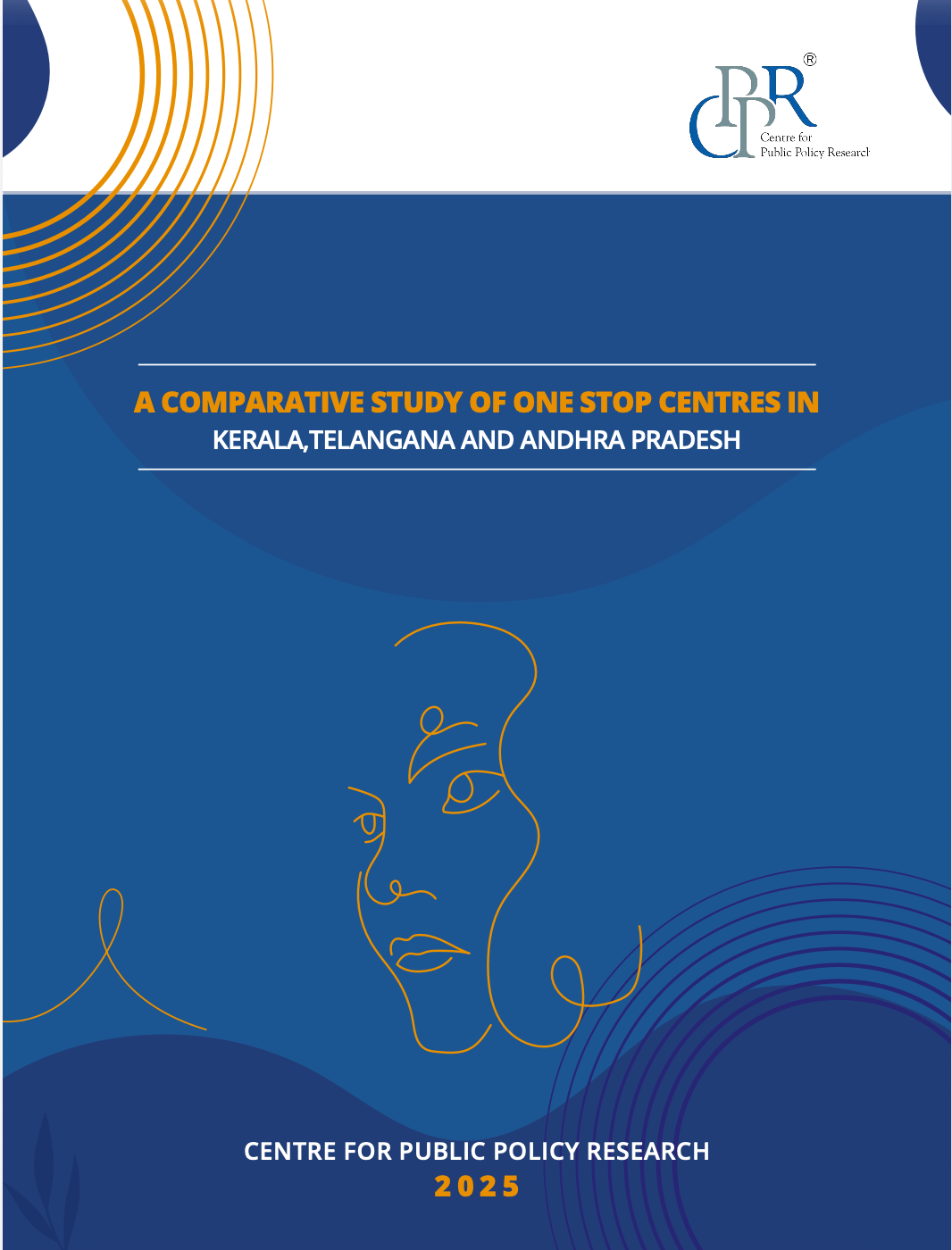
This report evaluates the implementation of the One Stop Centre (OSC) scheme in Kerala, Telangana, and Andhra Pradesh. Established as a cornerstone initiative under the Nirbhaya Fund, the OSC scheme is designed to provide integrated support to survivors of violence against women (VAW). By offering medical aid, police facilitation, legal assistance, psychosocial counselling, and temporary shelter under one roof, the scheme aims to prevent the re-traumatisation of survivors navigating fragmented support systems.
1. Framework and Methodology
The study utilizes the UniSAFE 7-P framework to assess the centres’ effectiveness across seven dimensions: Policy, Prevalence, Prevention, Protection, Prosecution, Provision of services, and Partnership. The research was conducted across 16 districts in the three states, selected based on crime data from the National Crime Records Bureau (NCRB).
2. State-Wise Performance and Findings
- Kerala: Managed by the Department of Women and Children, Kerala’s centres are noted for having sensitive staff and good protocol adherence. However, they suffer from funding delays and a lack of NGO collaboration.
- Telangana: This state uniquely outsources OSC operations to local NGOs, which has built significant community trust. Gaps include the absence of in-house Police Facilitating Officers (PFOs) and a lack of uniform operational guidelines.
- Andhra Pradesh: While centres are strategically placed near or within hospitals, there is a notable absence of in-house psychosocial counsellors in several districts. Furthermore, centres do not currently provide assistance for filing Domestic Incident Reports (DIR).
3. Critical Challenges in Addressing Violence Against Women
Despite the institutional framework, several systemic hurdles remain:
- Perception Gaps: Many OSCs are often viewed merely as counselling or mediation centres for family disputes rather than comprehensive medical and legal hubs for survivors of violence against women.
- Funding and Logistics: Significant delays in fund disbursement (ranging from six months to a year) lead to staff salary arrears and out-of-pocket expenses for daily operations.
- Accessibility Barriers: With typically only one centre per district, survivors in rural or peripheral areas face geographic and financial hurdles in reaching help.
- Monitoring and Data: There is a lack of robust Management Information Systems (MIS) to track case progress or conduct vulnerability mapping.
4. Strategic Recommendations
To enhance the efficacy of the OSC scheme in the fight against violence against women, the sources recommend:
- Proactive Outreach: Shifting from a “waiting for survivors” model to a “coming to you” approach by engaging community volunteers (Nirbhaya Saathis), ASHAs, and Anganwadi workers.
- Digital Integration: Implementing an MIS dashboard to schedule mandatory inter-departmental meetings, track funds, and monitor real-time case progress.
- Inclusive Strategies: Developing specific protocols to reach older women, persons with disabilities, and migrant communities, who are currently underrepresented in seeking OSC services.
- Academic and Expert Linkages: Partnering with universities to provide quarterly staff training and help analyze case data to improve service quality.
Views expressed by the authors are personal and need not reflect or represent the views of the Centre for Public Policy Research.

- CPPR Media&PR
- CPPR Media&PR
- CPPR Media&PR
- CPPR Media&PR
- CPPR Media&PR
- CPPR Media&PR
- CPPR Media&PR
- CPPR Media&PR
- CPPR Media&PR
- CPPR Media&PR
- CPPR Media&PR
- CPPR Media&PR
- CPPR Media&PR
- CPPR Media&PR
- CPPR Media&PR
- CPPR Media&PR
- CPPR Media&PR
- CPPR Media&PR
- CPPR Media&PR
- CPPR Media&PR
- CPPR Media&PR
- CPPR Media&PR
- CPPR Media&PR
- CPPR Media&PR
- CPPR Media&PR
- CPPR Media&PR
- CPPR Media&PR
- CPPR Media&PR
- CPPR Media&PR
- CPPR Media&PR
- CPPR Media&PR
- CPPR Media&PR
- CPPR Media&PR
- CPPR Media&PR
- CPPR Media&PR
- CPPR Media&PR
- CPPR Media&PR
- CPPR Media&PR
- CPPR Media&PR
- CPPR Media&PR
- CPPR Media&PR
- CPPR Media&PR
- CPPR Media&PR
- CPPR Media&PR
- CPPR Media&PR
- CPPR Media&PR
- CPPR Media&PR
- CPPR Media&PR
- CPPR Media&PR
- CPPR Media&PR
- CPPR Media&PR
- CPPR Media&PR
- CPPR Media&PR
- CPPR Media&PR
- CPPR Media&PR
- CPPR Media&PR
- CPPR Media&PR
- CPPR Media&PR
- CPPR Media&PR
- CPPR Media&PR
- CPPR Media&PR
- CPPR Media&PR
- CPPR Media&PR
- CPPR Media&PR
- CPPR Media&PR
- CPPR Media&PR
- CPPR Media&PR
- CPPR Media&PR
- CPPR Media&PR
- CPPR Media&PR
- CPPR Media&PR
- CPPR Media&PR
- CPPR Media&PR
- CPPR Media&PR
- CPPR Media&PR
- CPPR Media&PR
- CPPR Media&PR
- CPPR Media&PR
- CPPR Media&PR
- CPPR Media&PR
- CPPR Media&PR
- CPPR Media&PR
- CPPR Media&PR
- CPPR Media&PR
- CPPR Media&PR
- CPPR Media&PR
- CPPR Media&PR
- CPPR Media&PR
- CPPR Media&PR
- CPPR Media&PR
- CPPR Media&PR
- CPPR Media&PR
- CPPR Media&PR
- CPPR Media&PR
- CPPR Media&PR
- CPPR Media&PR
- CPPR Media&PR
- CPPR Media&PR
- CPPR Media&PR
- CPPR Media&PR
- CPPR Media&PR
- CPPR Media&PR
- CPPR Media&PR
- CPPR Media&PR
- CPPR Media&PR
- CPPR Media&PR
- CPPR Media&PR
- CPPR Media&PR
- CPPR Media&PR
- CPPR Media&PR
- CPPR Media&PR
- CPPR Media&PR
- CPPR Media&PR
- CPPR Media&PR
- CPPR Media&PR
- CPPR Media&PR
- CPPR Media&PR
- CPPR Media&PR
- CPPR Media&PR
- CPPR Media&PR
- CPPR Media&PR
- CPPR Media&PR
- CPPR Media&PR
- CPPR Media&PR
- CPPR Media&PR
- CPPR Media&PR
- CPPR Media&PR
- CPPR Media&PR
- CPPR Media&PR
- CPPR Media&PR
- CPPR Media&PR
- CPPR Media&PR
- CPPR Media&PR
- CPPR Media&PR
- CPPR Media&PR
- CPPR Media&PR
- CPPR Media&PR
- CPPR Media&PR
- CPPR Media&PR
- CPPR Media&PR
- CPPR Media&PR
- CPPR Media&PR
- CPPR Media&PR
- CPPR Media&PR
- CPPR Media&PR
- CPPR Media&PR
- CPPR Media&PR
- CPPR Media&PR
- CPPR Media&PR
- CPPR Media&PR
- CPPR Media&PR
- CPPR Media&PR
- CPPR Media&PR
- CPPR Media&PR
- CPPR Media&PR
- CPPR Media&PR
- CPPR Media&PR
- CPPR Media&PR
- CPPR Media&PR
- CPPR Media&PR
- CPPR Media&PR
- CPPR Media&PR
- CPPR Media&PR
- CPPR Media&PR
- CPPR Media&PR
- CPPR Media&PR
- CPPR Media&PR
- CPPR Media&PR
- CPPR Media&PR
- CPPR Media&PR
- CPPR Media&PR
- CPPR Media&PR
- CPPR Media&PR
- CPPR Media&PR
- CPPR Media&PR
- CPPR Media&PR
- CPPR Media&PR
- CPPR Media&PR
- CPPR Media&PR
- CPPR Media&PR
- CPPR Media&PR
- CPPR Media&PR
- CPPR Media&PR
- CPPR Media&PR
- CPPR Media&PR
- CPPR Media&PR
- CPPR Media&PR
- CPPR Media&PR
- CPPR Media&PR
- CPPR Media&PR
- CPPR Media&PR
- CPPR Media&PR
- CPPR Media&PR
- CPPR Media&PR
- CPPR Media&PR
- CPPR Media&PR
- CPPR Media&PR
- CPPR Media&PR
- CPPR Media&PR
- CPPR Media&PR
- CPPR Media&PR
- CPPR Media&PR
- CPPR Media&PR
- CPPR Media&PR
- CPPR Media&PR
- CPPR Media&PR
- CPPR Media&PR
- CPPR Media&PR
- CPPR Media&PR
- CPPR Media&PR
- CPPR Media&PR
- CPPR Media&PR
- CPPR Media&PR
- CPPR Media&PR
- CPPR Media&PR
- CPPR Media&PR
- CPPR Media&PR
- CPPR Media&PR
- CPPR Media&PR
- CPPR Media&PR
- CPPR Media&PR
- CPPR Media&PR
- CPPR Media&PR
- CPPR Media&PR
- CPPR Media&PR
- CPPR Media&PR
- CPPR Media&PR
- CPPR Media&PR
- CPPR Media&PR
- CPPR Media&PR
- CPPR Media&PR
- CPPR Media&PR
- CPPR Media&PR
- CPPR Media&PR
- CPPR Media&PR
- CPPR Media&PR
- CPPR Media&PR
- CPPR Media&PR
- CPPR Media&PR
- CPPR Media&PR
- CPPR Media&PR
- CPPR Media&PR
- CPPR Media&PR
- CPPR Media&PR
- CPPR Media&PR
- CPPR Media&PR
- CPPR Media&PR
- CPPR Media&PR
- CPPR Media&PR
- CPPR Media&PR
- CPPR Media&PR
- CPPR Media&PR
- CPPR Media&PR
- CPPR Media&PR
- CPPR Media&PR
- CPPR Media&PR
- CPPR Media&PR
- CPPR Media&PR
- CPPR Media&PR
- CPPR Media&PR
- CPPR Media&PR
- CPPR Media&PR
- CPPR Media&PR
- CPPR Media&PR
- CPPR Media&PR
- CPPR Media&PR
- CPPR Media&PR
- CPPR Media&PR
- CPPR Media&PR
- CPPR Media&PR
- CPPR Media&PR
- CPPR Media&PR
- CPPR Media&PR
- CPPR Media&PR
- CPPR Media&PR
- CPPR Media&PR
- CPPR Media&PR
- CPPR Media&PR
- CPPR Media&PR
- CPPR Media&PR
- CPPR Media&PR
- CPPR Media&PR
- CPPR Media&PR
- CPPR Media&PR
- CPPR Media&PR
- CPPR Media&PR
- CPPR Media&PR
- CPPR Media&PR
- CPPR Media&PR
- CPPR Media&PR
- CPPR Media&PR
- CPPR Media&PR
- CPPR Media&PR
- CPPR Media&PR
- CPPR Media&PR
- CPPR Media&PR
- CPPR Media&PR
- CPPR Media&PR
- CPPR Media&PR
- CPPR Media&PR
- CPPR Media&PR
- CPPR Media&PR
- CPPR Media&PR
- CPPR Media&PR
- CPPR Media&PR
- CPPR Media&PR
- CPPR Media&PR
- CPPR Media&PR
- CPPR Media&PR
- CPPR Media&PR
- CPPR Media&PR
- CPPR Media&PR
- CPPR Media&PR
- CPPR Media&PR
- CPPR Media&PR
- CPPR Media&PR
- CPPR Media&PR
- CPPR Media&PR
- CPPR Media&PR
- CPPR Media&PR
- CPPR Media&PR
- CPPR Media&PR
- CPPR Media&PR
- CPPR Media&PR
- CPPR Media&PR
- CPPR Media&PR
- CPPR Media&PR
- CPPR Media&PR
- CPPR Media&PR
- CPPR Media&PR
- CPPR Media&PR
- CPPR Media&PR
- CPPR Media&PR
- CPPR Media&PR
- CPPR Media&PR
- CPPR Media&PR
- CPPR Media&PR
- CPPR Media&PR
- CPPR Media&PR
- CPPR Media&PR
- CPPR Media&PR
- CPPR Media&PR
- CPPR Media&PR
- CPPR Media&PR
- CPPR Media&PR
- CPPR Media&PR
- CPPR Media&PR
- CPPR Media&PR
- CPPR Media&PR
- CPPR Media&PR
- CPPR Media&PR
- CPPR Media&PR
- CPPR Media&PR
- CPPR Media&PR
- CPPR Media&PR
- CPPR Media&PR
- CPPR Media&PR
- CPPR Media&PR
- CPPR Media&PR
- CPPR Media&PR
- CPPR Media&PR
- CPPR Media&PR
- CPPR Media&PR
- CPPR Media&PR
- CPPR Media&PR
- CPPR Media&PR
- CPPR Media&PR
- CPPR Media&PR
- CPPR Media&PR
- CPPR Media&PR
- CPPR Media&PR
- CPPR Media&PR
- CPPR Media&PR
- CPPR Media&PR
- CPPR Media&PR
- CPPR Media&PR
- CPPR Media&PR
- CPPR Media&PR
- CPPR Media&PR
- CPPR Media&PR
- CPPR Media&PR
- CPPR Media&PR
- CPPR Media&PR
- CPPR Media&PR
- CPPR Media&PR
- CPPR Media&PR
- CPPR Media&PR
- CPPR Media&PR
- CPPR Media&PR
- CPPR Media&PR
- CPPR Media&PR
- CPPR Media&PR
- CPPR Media&PR
- CPPR Media&PR
- CPPR Media&PR
- CPPR Media&PR
- CPPR Media&PR
- CPPR Media&PR
- CPPR Media&PR
- CPPR Media&PR
- CPPR Media&PR
- CPPR Media&PR
- CPPR Media&PR
- CPPR Media&PR
- CPPR Media&PR
- CPPR Media&PR
- CPPR Media&PR
- CPPR Media&PR
- CPPR Media&PR
- CPPR Media&PR
- CPPR Media&PR
- CPPR Media&PR
- CPPR Media&PR
- CPPR Media&PR
- CPPR Media&PR
- CPPR Media&PR
- CPPR Media&PR
- CPPR Media&PR
- CPPR Media&PR
- CPPR Media&PR
- CPPR Media&PR
- CPPR Media&PR
- CPPR Media&PR
- CPPR Media&PR
- CPPR Media&PR
- CPPR Media&PR
- CPPR Media&PR
- CPPR Media&PR
- CPPR Media&PR
- CPPR Media&PR
- CPPR Media&PR
- CPPR Media&PR
- CPPR Media&PR
- CPPR Media&PR
- CPPR Media&PR
- CPPR Media&PR
- CPPR Media&PR
- CPPR Media&PR
- CPPR Media&PR
- CPPR Media&PR
- CPPR Media&PR
- CPPR Media&PR
- CPPR Media&PR
- CPPR Media&PR
- CPPR Media&PR
- CPPR Media&PR
- CPPR Media&PR
- CPPR Media&PR
- CPPR Media&PR
- CPPR Media&PR
- CPPR Media&PR
- CPPR Media&PR
- CPPR Media&PR
- CPPR Media&PR
- CPPR Media&PR
