

Articles

Empowering Communities: The Role of a City Attorney in India
May 15, 2026
Why Kerala’s Plantation Sector Needs a Policy Reset
May 22, 2026The Educator-in-Chief: Where CM Satheesan Cannot Go Wrong
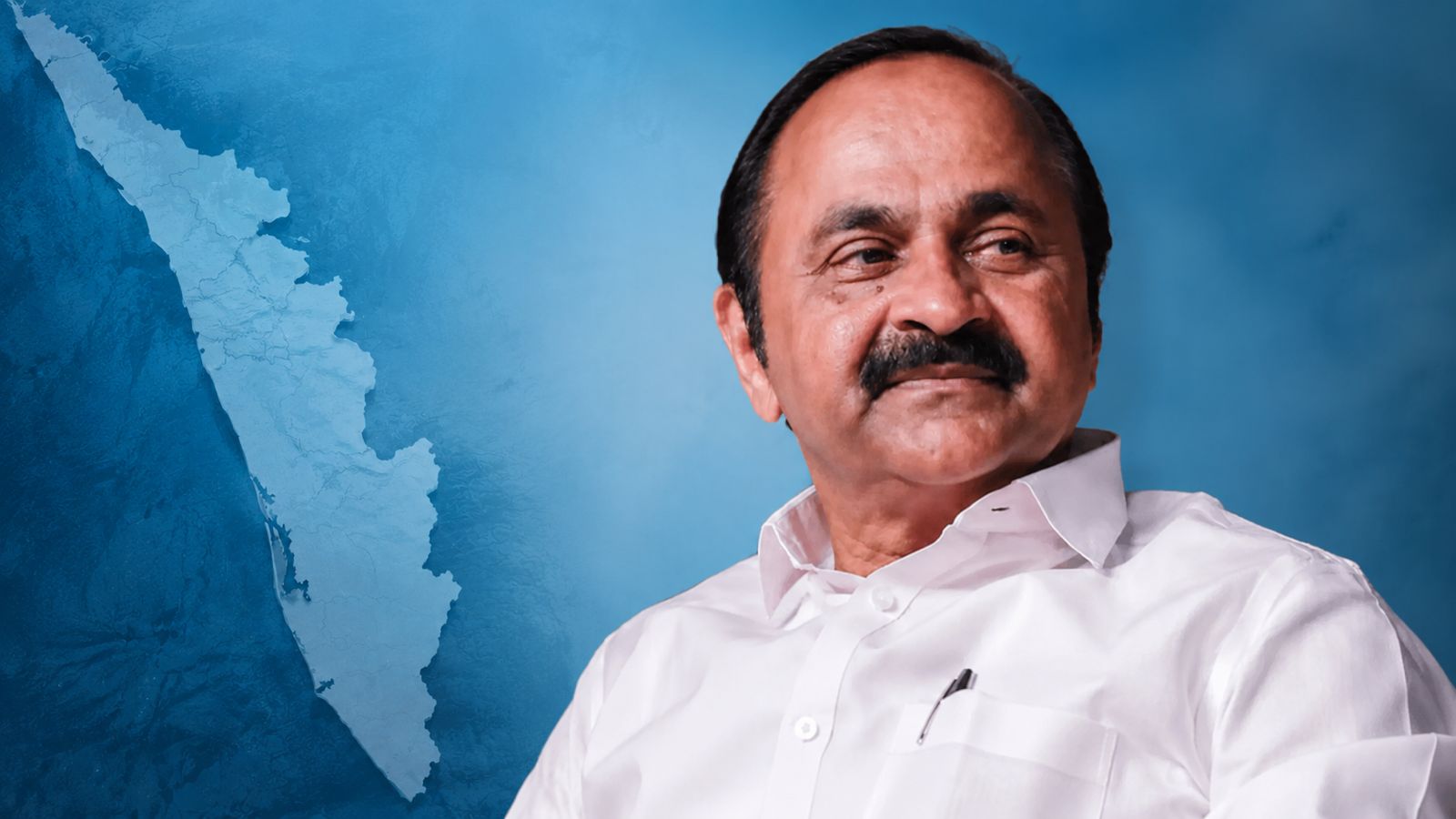
With the United Democratic Front’s historic mandate in the 2026 Assembly elections, V.D. Satheesan steps into Cliff House not merely as Kerala’s thirteenth Chief Minister, but as the custodian of an unprecedented generational hope. The massive support that propelled him to power—buoyed significantly by a restless, aspirational youth electorate—is less a validation of status-quo politics and more an urgent demand for structural renewal. However, as the euphoria of the swearing-in ceremony fades, the incoming Chief Minister faces an uncomfortable truth: in Kerala, desiring governance reform is easy, but implementing it means confronting a deeply entrenched, multi-generational socio-political consensus.
For over half a century, Kerala has operated under a heavily state-dominated, socialist paradigm. The state is traditionally viewed as the omnipresent provider, expected to be visible and active in every walk of life, from cradle-to-grave welfare to running commercial enterprises. Over decades, this model achieved global renown for its high human development indicators. Yet, it has concurrently saddled the state with chronic fiscal distress, a stifling bureaucratic apparatus, and a systemic inability to generate local wealth. The youth who voted for Satheesan are acutely aware of this paradox; they enjoy the fruits of Kerala’s high social investments, but must board flights to Bangalore, Dubai, or London to find meaningful employment.
Herein lies the trap where Chief Minister Satheesan cannot afford to go wrong.
History is littered with well-intentioned reformists who assumed an electoral victory was a blank check for administrative overhauls. In Kerala, any attempt to introduce tectonic shifts in governance and delivery models through sudden, top-down executive fiats will not survive. Shock therapy or aggressive market-fundamentalist rhetoric will rapidly collapse against the wall of institutional inertia, highly unionized labor, and a public conditioned to view state withdrawal as a betrayal. If the new administration frames its fiscal and administrative corrections through ideological extremes, it will trigger immediate political antibodies, paralyzing the government before it even begins.
Instead, Satheesan’s greatest tool will not be the legislative gavel, but the bully pulpit. To succeed, he must transition from the state’s chief executive to its Educator-in-Chief. He must fundamentally shift what political scientists call the Overton window—the range of ideas tolerated in public discourse.
Currently, the Overton window in Kerala firmly binds public policy to state dependency. To move that window toward wealth creation, fiscal discipline, and economic freedom, the Chief Minister must systematically reshape the public imagination.
This requires a highly calibrated, evidence-based approach to governance. The public, particularly the young demographic that championed his rise, must be taken into confidence not through empty rhetoric, but through data, scientific analysis, and honest communication. The administration needs to actively foster institutional avenues for critical thinking, laying bare the state’s balance sheets alongside successful alternative models from across the world.
Kerala possesses a media-attentive, highly social-media-penetrated, and deeply educated electorate. If the government leaves an information vacuum, fake news and false narratives will instantly exploit it. The CM should actively encourage print, television, and digital platforms to debate public data and global evidence in a healthy, constructive manner.
When introducing policy reforms—whether restructuring loss-making public sector units, simplifying ease of doing business, or inviting private capital into higher education—the government must explicitly demonstrate the “why.” Keralites are among the most literate and globally connected citizens on earth; they understand how modern economies function because they sustain them abroad. If presented with clear data, transparent evidence, and global best practices adapted to local realities, the domestic public will recognize that economic freedom is not the antithesis of social welfare, but the very engine required to sustain it.
Repositioning, does not mean abandoning Kerala’s celebrated social safety net; rather, it means transforming the government from an inefficient operator into an agile, robust facilitator. The state must learn to step back from areas where the private sector and youth entrepreneurship can innovate, allowing it to double down on regulatory quality, infrastructure, and world-class public goods.
The political climate in Kerala is uniquely ripe for this transformation. There is a palpable, widespread exhaustion with the stagnant economic models of the past. The state’s youth are hungry for a future where prosperity can be home-grown. V.D. Satheesan possesses the intellectual caliber, the oratorical skill, and the clean, reformist image necessary to lead this dialogue. By shunning ideological extremes, anchoring policy in empirical evidence, and treating the electorate as mature stakeholders in an ongoing policy debate, he can build a durable consensus for change.
The mandate of 2026 is an invitation to usher in a new era. If Chief Minister Satheesan can successfully educate the public and systematically expand the boundaries of what is politically possible, he will not just run a government, he will transform Kerala.
Dr D Dhanuraj is the Founder-Chairman at Centre for Public Policy Research (CPPR).
Views expressed by the authors are personal and need not reflect or represent the views of the Centre for Public Policy Research (CPPR).

Dr Dhanuraj is the Chairman of CPPR. His core areas of expertise are in international relations, urbanisation, urban transport & infrastructure, education, health, livelihood, law, and election analysis. He can be contacted by email at [email protected] or on Twitter @dhanuraj.
