
Articles

China’s Diplomatic Signalling During Trump’s 2026 Visit: Thucydides Trap and the “Ganges Line”
May 25, 2026
Fallow Land, Frozen Laws: Rethinking Land Leasing in Kerala
May 28, 2026Kerala’s Rural Mobility Crisis Is Not About Roads – It Is About Access
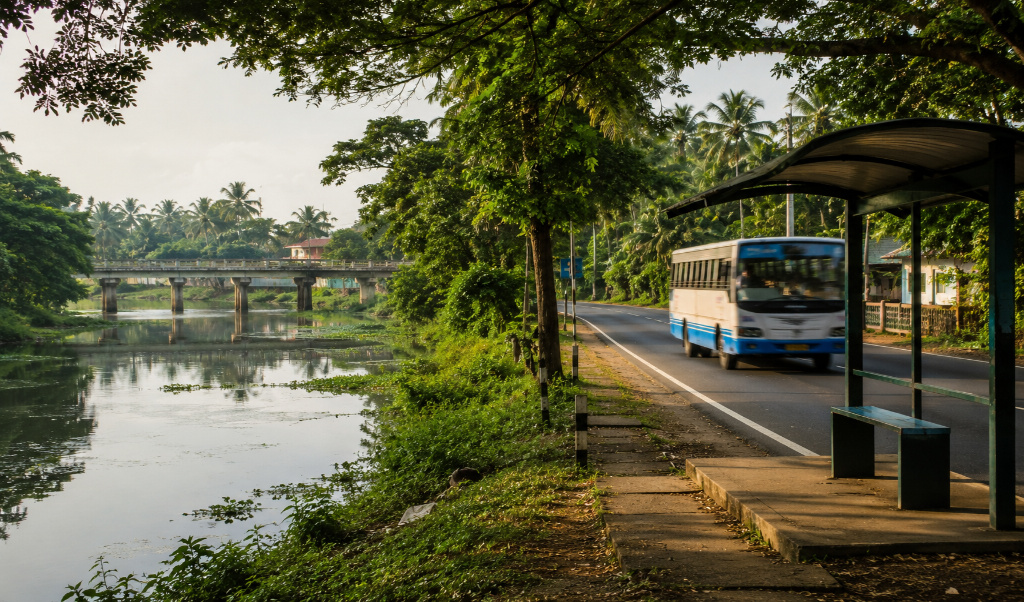
Thuruth village in Aluva, is no longer an island. Five bridges now connect the village to the mainland, three of them motorable. Roads exist, vehicles move, and Aluva lies barely a few kilometres away. Yet for most residents, public transport remains effectively absent. This is the paradox at the heart of rural mobility in Kerala.
For decades, Kerala’s transport story has been associated with high road density, extensive bus networks, and strong physical connectivity. But field evidence from villages such as Thuruth in Aluva, Puthenvelikkara in North Paravur, and Vazhathope in Idukki reveals a different reality – one where infrastructure exists, but mobility does not.
A recent survey conducted by CPPR in Thuruth highlights the scale of this disconnect. More than half of respondents identified the lack of nearby public transport as their primary mobility concern. Nearly 71 per cent reported depending on private vehicles for daily travel, while over 68 per cent stated that no shared mobility services existed in their locality. At the same time, nearly three-fourths expressed willingness to use shared mobility options if such services were made available.
These findings point toward a larger structural problem. Kerala has invested heavily in road infrastructure, but far less attention has been paid to whether transport systems actually serve the mobility needs of rural residents. The issue is not merely operational failure, but a transport framework that continues to prioritise physical connectivity over functional accessibility.
When Connectivity Does Not Translate Into Mobility
The problem becomes particularly visible in villages located outside major corridors. In Puthenvelikkara, buses operate along main routes, but services taper off sharply after peak hours. Residents report that buses become unavailable after 6 PM, effectively isolating many interior settlements during non-peak hours. In Vazhathope’s hilly regions, the situation is even more severe, with some settlements receiving only one or two bus services a day.
This creates a paradox that transport planners often overlook. Operators point to low ridership, while residents point to unusable services. The problem is not simply a lack of buses, but it is the mismatch between transport design and lived mobility patterns. Across these regions, the “last-mile problem” is not the last mile at all – it is the system itself.
Residents in many rural settlements travel several kilometres merely to reach a bus route. In interior settlements, autorickshaws function as unofficial feeder systems connecting homes to main roads and junctions. Schools in remote regions have also developed parallel transport arrangements of their own, hiring private vehicles because conventional public transport cannot reliably serve dispersed settlements.
The Informal Mobility Systems That Keep Rural Kerala Moving
What exists today is a fragmented mobility ecosystem in which formal transport operates largely on paper, while actual mobility depends on informal adaptations. In Thuruth and Puthenvelikkara, passengers informally pool auto rides and share fares. In Vazhathope, “trip autos” operate as demand-responsive services in areas with limited bus connectivity. Historically, jeep services played a similar role across rural Kerala, particularly in hilly and interior regions where terrain and low passenger density made conventional bus operations difficult.
These systems survive because they respond to how rural mobility actually functions, which is characterised by dispersed demand, irregular travel patterns, first- and last-mile gaps, and low-density settlements. Their lower operating costs also make them viable in areas where conventional stage carriage operations struggle to sustain regular services. Yet despite performing these essential mobility functions, these services remain outside formal recognition.
A Strong Opportunity for the New Government
The Kerala Public Transport Urban–Rural Integration and Last-Mile Connectivity Scheme, 2025, introduced by the previous government, acknowledged an important reality – that improving rural and last-mile connectivity must become central to Kerala’s transport planning. The scheme’s focus on expanding stage carriage connectivity across underserved regions reflects a significant policy recognition that mobility gaps persist despite Kerala’s strong road network.
However, the experience from villages such as Thuruth, Puthenvelikkara, and Vazhathope suggests that conventional route-based expansion alone may not fully address the nature of rural mobility demand. In many low-density and geographically dispersed regions, mobility patterns are irregular, fragmented, and economically difficult to serve through fixed-route bus systems alone.
This creates an opportunity for the present government to build on the objectives of the 2025 scheme by introducing a more flexible and locally responsive mobility framework alongside conventional bus expansion.
Moving Beyond the Regulated Informality Trap
CPPR’s recent research on Kerala’s transport regulatory framework shows that the rigid stage carriage–contract carriage classification under the Motor Vehicles Act and the Kerala Motor Vehicles Rules leaves little legal space for shared mobility services operated through smaller vehicles. Permit conditions relating to exclusive hiring, fixed routes, designated stands, and operational restrictions collectively restrict flexible transport services.
At the same time, the Motor Vehicles (Amendment) Act, 2019, already empowers state governments to introduce flexible shared mobility schemes for rural transport and last-mile connectivity. Kerala therefore possesses both the legal basis and the policy opportunity to move beyond rigid permit classifications and develop a structured regulatory framework for shared mobility services.
The challenge is no longer whether these systems should exist. They already exist informally across the state. The real question is whether policy can formally integrate them into Kerala’s broader public transport ecosystem.
Shared Mobility as the Next Phase of Rural Transport Reform
What rural Kerala increasingly needs is not simply more transport, but different transport.
Demand-responsive mobility systems – shared autos, feeder services, flexible-route transport, and integrated local mobility networks – can complement the government’s plans to strengthen public transport connectivity. Rather than replacing conventional bus services, these systems can function as feeder and support networks, particularly in low-demand regions where full-scale stage carriage operations are economically difficult to sustain.
Such an approach could formally integrate feeder autos, pooled services, and flexible-route vehicles into the broader public transport network. Route-based shared mobility schemes and demand-responsive services could help bridge first- and last-mile gaps while improving service frequency and affordability for rural commuters.
This is particularly important for women, elderly residents, students, and public transport-dependent populations whose mobility needs often remain underserved under existing systems. Survey findings from Thuruth reveal clear gender disparities in mobility access, with 41 per cent of the female population depending on shared and informal travel arrangements, compared to just 21 per cent of the male population.
Beyond Roads and Bridges
Kerala’s rural mobility crisis is no longer about physical connectivity. Roads, bridges, and infrastructure have expanded significantly over the past decades. The real challenge now lies in functional accessibility – whether people can move affordably, safely, reliably and at the times they actually need transport.
In villages like Vazhathope, Puthenvelikkara and Thuruth, the mobility systems that work are often informal, flexible, and locally adapted. The next phase of Kerala’s transport reform may therefore lie not only in expanding conventional transport networks but also in recognising and strengthening the mobility systems that rural communities have already built for themselves.
Nikhil Ali is a Senior Research Associate (Urban) at the Centre for Public Policy Research (CPPR).
Views expressed by the authors are personal and need not reflect or represent the views of the Centre for Public Policy Research (CPPR).

Nikhil Ali is a Senior Research Associate (Urban) at the Centre for Public Policy Research. He completed his graduation in Civil Engineering from Sree Narayana College of Engineering and is a seasoned Civil Engineer with working experience at Tata Realty and Infrastructure Ltd. With a passion for urban planning, he acquired his master's degree in Urban Planning from Hindustan Institute of Technology and Science, Chennai. His expertise lies in Urban Mobility, land use planning/analysis, and water-sensitive planning.
