
Articles

D Dhanuraj of CPPR on the Kerala Local Body Election Results 2025
December 17, 2025
EP 68 | Power, Interest, and Incentives in Politics — Public Choice Theory | Policy Beyond Politics
December 18, 2025Gendered Restrictions in Kerala’s Factory Labour Rules: An Assessment of Missed Reforms
After a long wait, labour codes have come into force. It’s now time for the state government to draft rules under the Code for its implementation on ground. Since Labour is a subject in the concurrent list, Labour Codes confer rule-making powers under the Code on state governments.
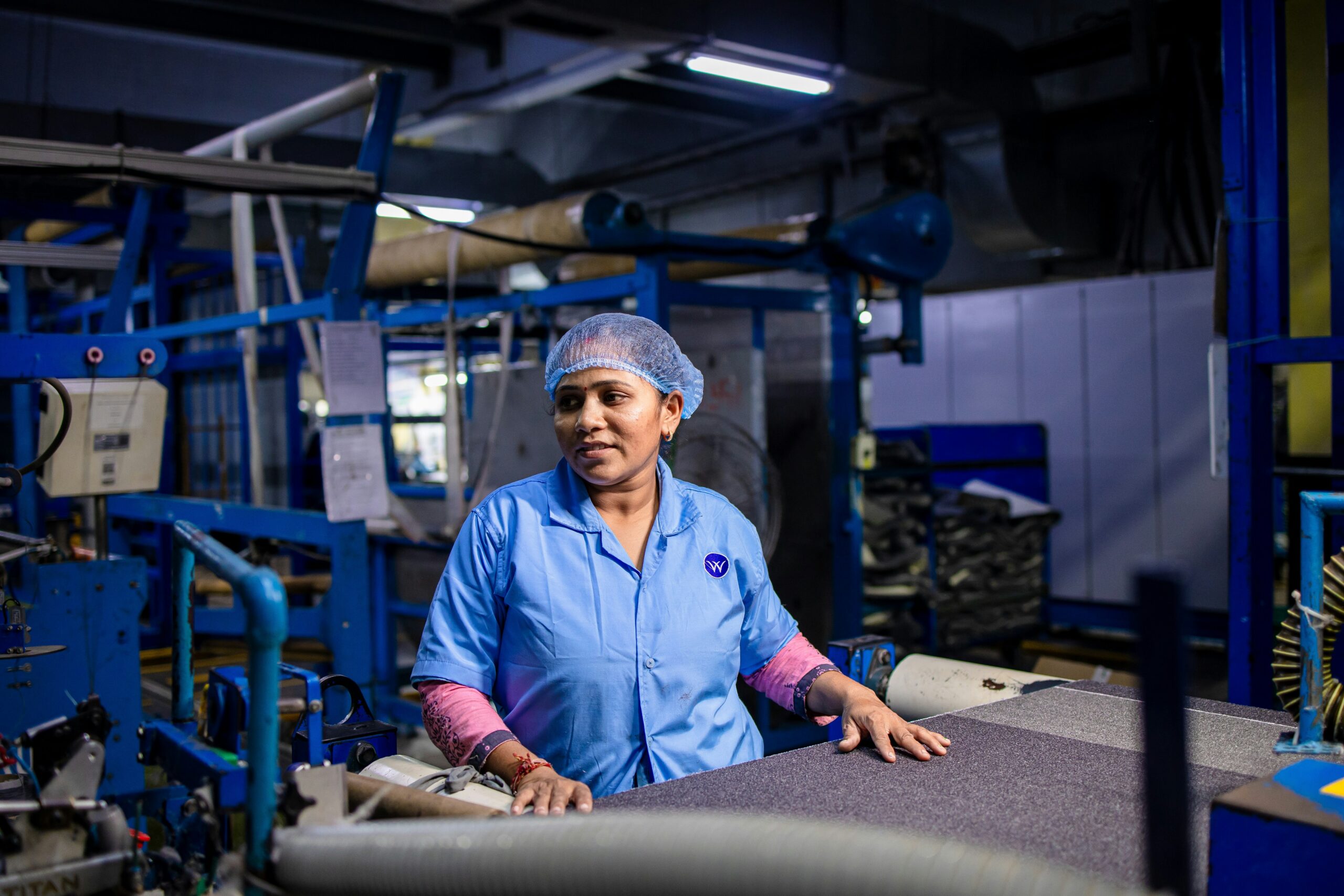
The Occupational Safety, Health and Working Conditions Code (OSHW) removes restrictions on women’s employment in factories during night hours and in all categories of manufacturing units, including those classified as hazardous, with the consent of the woman and by providing a safe working environment. The specific conditions applicable to employers are to be prescribed through state rules.
However, even before the enforcement of the Labour Codes, 2025 witnessed several reforms to long-standing legal prohibitions on women workers across various Indian states. Gujarat issues a notification in July amending its rules through the Factories (Gujarat Amendment) Ordinance, 2025, permitting women to work during night hours with safety conditions and increasing the daily working hours from 8 to 12 hours. Several other states, including Tamil Nadu and lately Delhi, have relaxed the night shift restrictions for women under provisions of the Factories Act by amending their respective state rules through presidential orders. States such as Punjab, Goa, Haryana, and Tamil Nadu have also amended their Shops and Establishments Acts to lift the night shift ban on women in 2025.
While the 2018 Amendment permits women in Kerala to work in shops and establishments, withholding the same in factories or manufacturing industries creates a policy inconsistency. Harmonizing the labour laws to ensure equal rights for women to choose when and where to work is essential to strengthen the state’s performance in SDG Goal 5 of gender equality.
Context of Kerala
According to the Periodic Labour Force Survey (April–June 2025), the labour force participation rate among females aged 15 years and above in Kerala stands at 33.5 percent. Of this, only 15 percent is accounted for by employment in the secondary sector, i.e., manufacturing jobs. The majority of women in Kerala, both rural and urban, work in the tertiary sector, with 56.7 percent of rural females and 70.8 percent of urban females, respectively. These numbers require further analysis to assess the job quality, as self-employment constitutes a significant share of women’s work.
Why does the proportion of female workers in the secondary sector remain stagnated, with hardly 14.4 percent of rural females and 15.6 percent of urban females engaged in the sector? This underrepresentation in manufacturing can be partly attributed to the restrictive provisions under Kerala’s Factories Rules, 1957.
The Factories Act of 1948 and the respective state rules of 1957 restrict women from working night shifts in factories. Women are restricted to work in factories post 7 PM to 6 AM. Exercising powers under the Concurrent List, Kerala relaxed the restrictive provision to an extent through a Gazette Notification on March 27, 2025, allowing women to work until 10 PM in 24 categories of factories, subject to conditions such as employer-provided transportation and security and compliance with Section 54 of the Factories Act, 1948, on working hours. This represents only a three-hour relaxation, and the broader night-shift prohibition remains in place.
Kerala’s broader industrial policy landscape has also evolved over the years. On 13th Oct, 2025, at the Kerala Women Entrepreneur Conclave, Minister for Industries in Kerala, P Rajeev, announced the launch of the Kerala Women Industrial Park. Recently, the minister also launched the Hi-Tech Manufacturing Framework to position the state as a center for advanced R&D, design, and engineering, and advanced certification within the manufacturing sector. Rs 1800 crore was announced in the Budget 2025 for industrial parks, small-scale and nano industries, and others, which would encourage more new facilities coming up in Kerala. The State Industrial Policy 2023 has identified 22 priority sectors for expanding Kerala’s industrial base as well, including manufacturing, aerospace and defense, biotechnology & life sciences, high-value-added rubber products, electric vehicles, graphene, etc. The share of manufacturing increased from 9.8% in 2014-15 to 12.5% in 2019-20, showing a steady growth of the sector. Ensuring that women fully benefit from this expansion requires corresponding reforms in labour rules.
The gains from this growth in the manufacturing sector must translate into opportunities for women. Night shift restrictions and the blanket ban on women working in those industries categorized as “hazardous” or “dangerous” under Appendix A of the Factories Rules 1957 significantly constrain the scope of women’s work in the factories of Kerala. A 2022 CPPR Study has revealed that many of these rules that came in 1957 hold no ground in the contemporary industrial context due to advancements in safety measures. For instance, in the coir industry, chemical-based dyes are replaced by water-based dyes for stenciling and dyeing of mats. However, the restriction on the activity of women still holds, creating an occupational segregation.
Further, Kerala must step forward by taking away the restrictions on women working in “dangerous industries” in line with the Occupational Safety, Health, and Working Conditions Code 2020 (not yet enforced), with exemptions for pregnant and lactating women alone. To translate industrial growth into inclusive employment, Kerala must align its labour laws with modern safety standards, ensuring that women have the freedom and protection to participate fully in the manufacturing economy.
Way Forward
With the Labour Codes now in force, Kerala must revisit the draft OSHW Rules of 2021 to align them with broader gender-equality standards. Employer obligations such as providing transportation, having at least 2 women in a group of five for night shifts, having women security guards, at least 1/3rd women supervisors, etc., raise the compliance cost of the employer. This could lead to an unintended consequence of not hiring women to avoid the added compliance and recruitment at different levels. While the employers must ensure safer working conditions, these obligations can be met through collaborative models, shared resources, and other innovative arrangements.
References
- Mishra, Alok K. “Delhi Clears Way for Women to Work Night Shifts, Promises Safety Net.” Hindustan Times, July 30, 2025.https://www.hindustantimes.com/cities/delhi-news/delhi-clears-way-for-women-to-work-night-shifts-promises-safety-net-101753814807630.html
- “General Information — Department of Industries & Commerce, Government of Kerala.” KeralaIndustry.org. Accessed October 13, 2025.https://www.keralaindustry.org/index.php/kerala/general-information
- “Women in Night Shifts — Compliance & Safety.” Lawrbit. Accessed October 13, 2025.https://www.lawrbit.com/article/women-in-night-shifts-compliance-safety/
- Ministry of Statistics and Programme Implementation. Quarterly Bulletin, Periodic Labour Force Survey: April–June 2025. New Delhi: Government of India. Accessed October 13, 2025.https://www.mospi.gov.in/sites/default/files/publication_reports/QuarterlyBulletinPLFS_April_June%202025.pdf
- Government of Kerala, Department of Industries. Kerala Industrial Policy 2023. Kerala: Government of Kerala, 2023.https://industry.kerala.gov.in/images/pdf/2023/IND_POLICY_ENG.pdf
- Centre for Public Policy Research. 2023. Easing the Legal Barriers for Employment of Women in Factories in Kerala. January 25.https://www.cppr.in/policy-briefs/easing-the-legal-barriers-for-employement-of-women-in-factories-in-kerala
Anu Maria Francis is a Senior Associate, Research and Project Management, at the Centre for Public Policy (CPPR), Kochi, Kerala, India.
Views expressed by the authors are personal and need not reflect or represent the views of the Centre for Public Policy Research (CPPR).

Anu Maria Francis is the Assistant Manager (Research and Project Management) at the Centre for Public Policy Research (CPPR), Kochi. She is a policy analyst focusing on regulatory and governance reforms, economic freedom, urban development, and gender policy. She holds a BA LL.B. degree from the National University of Advanced Legal Studies, Kochi, and was part of the 2024 cohort of the US Department of State’s Professional Fellows Program.
