

Agriculture and Land Policies

The Educator-in-Chief: Where CM Satheesan Cannot Go Wrong
May 18, 2026
What Assam’s Returning Government Must Deliver for its Tea Garden Community
May 22, 2026Why Kerala’s Plantation Sector Needs a Policy Reset
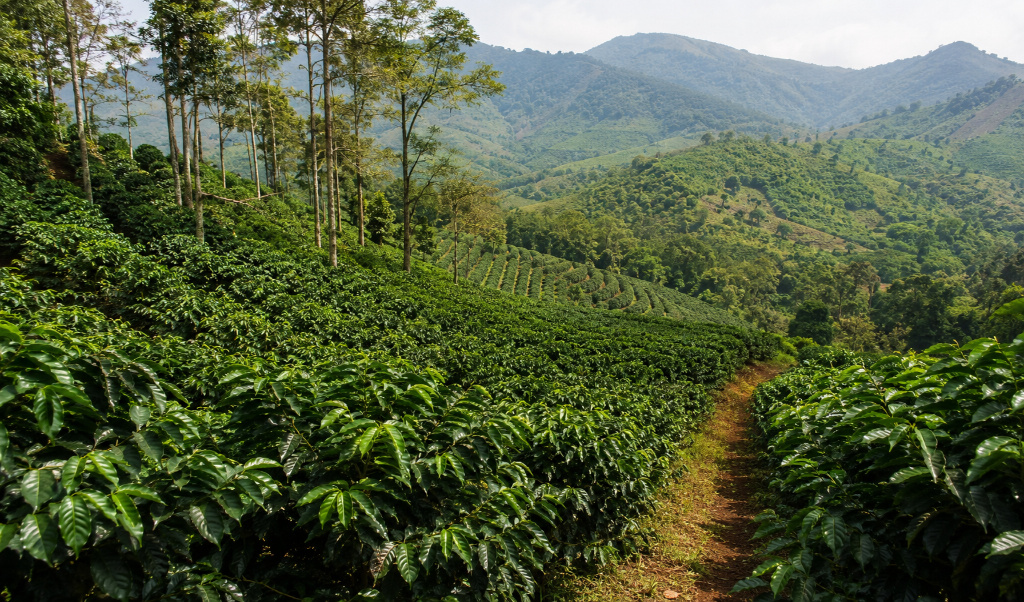
Kerala’s plantation sector has, for decades, remained a vital pillar of the state’s agrarian economy, sustaining the livelihoods of over ten lakh farmers, generating employment for more than four lakh workers, and contributing substantially to exports and rural development. However, the sector is now facing mounting challenges marked by structural stagnation, declining productivity, rising costs, and weakening global competitiveness.
The challenges confronting Kerala’s plantations are not merely cyclical—they are deeply structural. Over the past decade, the sector’s economic performance has weakened considerably. The total value of plantation output declined sharply from around ₹21,000 crore in 2013–14 to ₹9,750 crore in 2016–17, with only a partial recovery thereafter to about ₹13,542 crore in 2020–21. At the same time, while the area under plantations has expanded from 6.65 lakh hectares to 7.24 lakh hectares, production has declined—from 9.1 lakh tonnes in 2010–11 to about 7.06 lakh tonnes in 2023–24. This paradox of “more land, less output” signals deeper inefficiencies within the system.
While the number of registered plantations has slightly increased—from 693 in 2015 to 719 in 2022—the number of operational plantations has decreased from 559 in 2015 to 511 in 2021. Similarly, the sector’s estimated average daily employment fell sharply from 74,281 in 2004 to 36,126 in 2015, then rose slightly to 50,148 in 2022, according to the Labour Statistics of Kerala.
One of the most pressing issues is declining productivity, particularly in rubber, which accounts for about 76% of Kerala’s total plantation area (2023-24). Rubber productivity declined from 1,495 kg/ha in 2005–06 to 968 kg/ha in 2023–24. Although rubber continues to dominate in area and production volume, its lower yield has significantly impacted the plantation sector’s overall performance. Tea and coffee too exhibit stagnation, driven by ageing plantations, climate variability, and limited reinvestment. These trends are compounded by rising labour costs, making Kerala among the highest in India. For instance, in 2021, the daily wage of plantation workers in Kerala stood at ₹414.68, significantly higher than West Bengal (₹202), Assam (₹205), Karnataka (₹357.16), and Tamil Nadu (₹347.57).
However, the most critical constraint lies not in markets or climate but in policy. Kerala’s land-use regulatory framework, particularly under the Kerala Land Reforms Act, 1963, has inadvertently created rigidities that now hinder the sector’s growth. While plantations were exempted from land ceilings to preserve their economic viability, this exemption has had consequences. Any attempt to diversify beyond a narrow set of permitted crops (i.e, tea, coffee, rubber, cardamom and cocoa) risks losing plantation status and triggering land ceiling provisions.
Even the 2012 amendment of the Kerala Land Reforms Act, which allows up to 5 per cent diversification under section 81(4), is insufficient for meaningful economic restructuring. Similarly, procedural barriers under the Kerala Land Utilisation Order, 1967, require approvals for crop conversion, further discouraging adaptive decision-making. The cumulative effect is a policy environment that locks plantations into monocropping systems, limiting their ability to respond to market signals, mitigate risks, or enhance income. Global and interstate experiences offer a stark contrast. Regions such as West Bengal, Sri Lanka, and Vietnam have embraced diversification, agroforestry, and allied activities to strengthen the plantation sector’s resilience and income streams. Kerala, in comparison, remains constrained by regulatory inertia.
The need of the hour is not incremental change but a calibrated policy reset.
First, land-use regulations must be modernised. The definition of plantation crops should be expanded to encompass a broader range of long-duration, high-value crops. More importantly, diversification limits must be significantly relaxed, allowing planters to adopt mixed cropping, agroforestry, and allied activities without fear of losing land status.
Second, administrative reforms are essential. A single-window clearance mechanism for approvals related to plantation diversification, land-use permissions, plantation tourism, processing units, and infrastructure development can replace the current fragmented multi-departmental approval system involving departments such as the Land Revenue Department, Forest Department, Tourism Department, and Local Self-Governments. This would reduce delays, improve coordination, and create a more predictable environment for investment and innovation in the plantation sector.
Third, productivity enhancement must be prioritised. This includes targeted support measures such as subsidised replanting schemes for ageing plantations, access to low-interest credit, distribution of high-yield and climate-resilient planting materials,
promotion of mechanisation to address labour shortages, and greater investment in research, extension services, and climate-resilient agricultural practices Fourth, value addition and diversification of income streams should be promoted through enabling policy reforms that permit integrated farming and allied activities within plantation areas. This includes allowing processing, branding, packaging, and sustainable resource-use practices within plantation premises, along with support for farmer collectives, FPOs, and public-private partnerships to improve market access, shared infrastructure, and value-added production. The government can further facilitate brand development, GI tagging, and market positioning to strengthen Kerala’s plantation economy while ensuring environmentally sustainable practices.” Finally, policy must recognise plantations not merely as agricultural units but as integrated economic ecosystems—combining production, employment, environment, and rural development. This requires effective cross-departmental convergence to align agricultural, industrial, and environmental policies.
The future of plantations lies not in preserving the past but in embracing diversification, sustainability, and competitiveness. A forward-looking reform agenda can transform Kerala’s plantations from a sector in decline to one of resilience and growth—benefiting farmers, workers, and the broader economy alike. The challenge before the new government is clear: shift from a regime of control to one of enabling flexibility and innovation in the Plantation sector to ensure its economic viability.
Banisha Begum Shaikh is a Senior Associate-Research & Projects at the Centre for Public Policy Research (CPPR), Kochi, Kerala, India.
Views expressed by the authors are personal and need not reflect or represent the views of the Centre for Public Policy Research (CPPR).

With over 5 years of experience as a research professional, Banisha Begum Shaikh specializes in conducting in-depth sectoral evaluation at both national & state level policy research, policy drafting, white paper development, advocacy, implementation and impact assessment across various sectors of the economy.
Banisha's past research work has reached the policy makers desks at central & state levels with several suggestions being reflected in key policy and regulatory reforms.
