
Articles

What Assam’s Returning Government Must Deliver for its Tea Garden Community
May 22, 2026
Public Interest and the Vortex of Bus Route Nationalisation
May 22, 2026Beyond Welfare: What Kerala’s New Government Must Prioritise for Fisheries and Coastal Communities
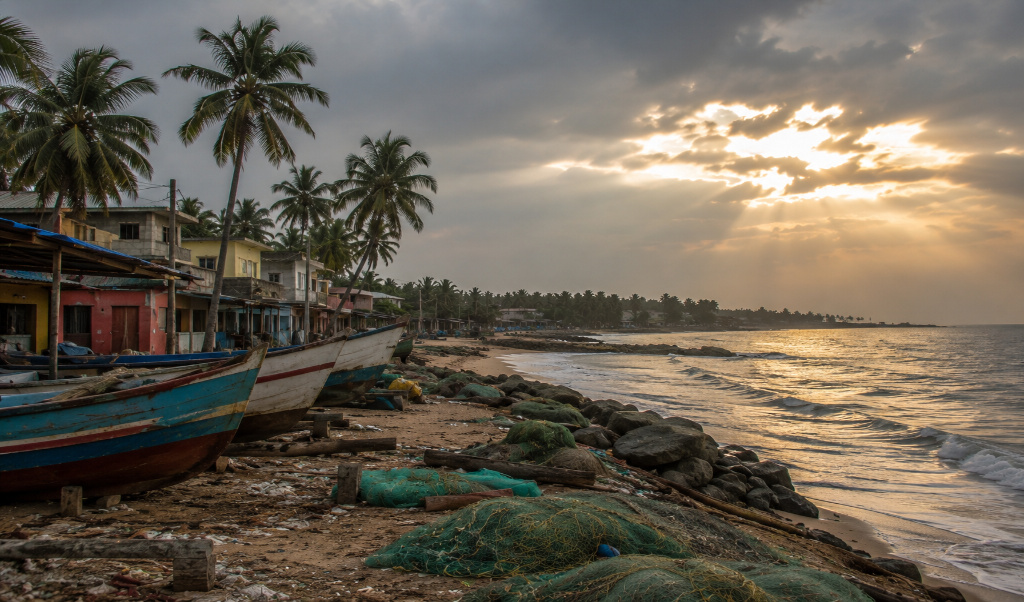
In the run-up to the 2026 Kerala elections, fishing communities became one of the state’s most actively courted constituencies. Political parties announced housing schemes, insurance coverage, harbour projects, and welfare measures across Kerala’s 600-kilometre coastline, where over 10.65 lakh people depend on fisheries for their livelihoods. The attention was politically understandable. Coastal communities represent both a major economic sector and a geographically concentrated electorate.
While welfare measures remain important, the larger question of long-term fisheries governance received far less attention during the campaign. For years, the sector has largely been addressed through short-term responses such as pre-election welfare announcements, post-disaster compensation, and temporary relief measures. As Kerala’s coastal communities face mounting pressures from declining fish stocks, climate change, and livelihood insecurity, the incoming government must move towards a more sustained and structural policy approach.
A Sector Under Stress
Kerala’s fisheries economy is facing visible structural decline. Marine fish landings have fallen from 6.10 lakh metric tonnes in 2018–19 to 5.81 lakh metric tonnes in 2023–24. The Chakara phenomenon, the seasonal near-shore upwelling that once defined fishing cycles along Kerala’s coast, has become increasingly unpredictable. Several fish species that once shaped local food cultures and coastal markets have steadily disappeared from commercial catches.
The problem is not limited to marine fisheries. Despite possessing nearly 1.78 lakh hectares of freshwater resources, inland aquaculture contributes only 26 percent of Kerala’s total fish production, far below the national average of 75 percent. This gap reflects weak institutional planning rather than a lack of ecological potential.
At the same time, poorly regulated aquaculture expansion has begun damaging the very ecosystems on which fisheries depend. Intensive shrimp farming in districts such as Kannur and Malappuram has accelerated the destruction of mangroves and estuarine wetlands. Kerala cannot afford an aquaculture strategy built on ecological depletion. Instead, the state should prioritise sustainable models such as biofloc systems, recirculating aquaculture, and integrated rice-fish cultivation that work with Kerala’s wetland ecosystems rather than against them.
The Limits of Reactive Governance
Many of the sector’s challenges persist because fisheries governance remains politically reactive rather than scientifically driven. The recurring debate over the monsoon trawling ban reflects this pattern. Kerala’s resistance to proposals for extending the ban period has largely emerged from unresolved conflicts between artisanal fishers seeking longer recovery periods and mechanised operators demanding shorter restrictions.
Rather than postponing these disputes, the state government should establish a transparent consultative mechanism that includes both artisanal and mechanised fishing sectors. Decisions on trawling bans and seasonal restrictions must be grounded in regular scientific stock assessments rather than short-term political calculations.
Kerala’s fisheries welfare institutions continue to play an important role, but they also reveal the limitations of the current governance model. The Kerala Fishermen Welfare Fund Board (KFWFB) and Matsyafed remain central to welfare delivery, yet Matsyafed’s declining market influence and stagnant cooperative participation indicate deeper institutional problems.
The challenge before the new government is not simply to expand schemes, but to reform institutions into active economic actors. Matsyafed must move beyond passive welfare administration and intervene more directly in markets by improving price realisation at landing centres, expanding cold-chain connectivity, and linking fisher cooperatives to retail and export markets.
Climate Change and Coastal Infrastructure
Climate vulnerability has intensified the pressures facing Kerala’s coastal communities. Coastal erosion continues to worsen across districts such as Thiruvananthapuram, Alappuzha, and Thrissur. Cyclones in the Arabian Sea, especially Ockhi in 2017, exposed major weaknesses in Kerala’s disaster preparedness systems and highlighted the growing risks faced by fishing households.
Sea-level rise and increasingly unpredictable weather patterns are now shortening safe fishing windows and threatening low-lying coastal settlements. Welfare measures alone cannot absorb these long-term pressures.
Kerala therefore requires a comprehensive Coastal Climate Adaptation Plan that combines environmental resilience with economic infrastructure. This should include climate-resilient fishing harbours, modernised landing centres, village-level early warning systems integrated with fisheries operations, and coastal land-use regulations that protect fishing communities from displacement caused by port expansion and speculative real estate development.
The post-harvest sector also requires urgent attention. Although Kerala possesses substantial cold storage infrastructure, fishers continue to rely on middlemen-dominated supply chains where they capture only a small share of the final market value. The priority should shift from simply increasing storage capacity to building integrated cold-chain connectivity between landing centres, transport systems, and urban markets.
Women Remain Excluded From Fisheries Governance
One of the most overlooked failures in Kerala’s fisheries governance is the exclusion of women from formal decision-making structures. Women form the backbone of fish vending, curing, and post-harvest processing, yet they remain largely absent from fisher cooperatives, welfare boards, and policy consultations.
This exclusion has direct economic consequences. Women vendors often absorb the worst effects of market volatility without access to institutional credit or financial protection. During monsoon bans and seasonal disruptions, women frequently manage household survival despite receiving little targeted support from welfare systems.
The new government must address this imbalance through concrete reforms. Reserved representation for women in cooperative governance, credit systems tailored to fish vendors, and insurance schemes that recognise women’s occupational risks are essential if fisheries policy is to reflect the realities of Kerala’s coastal economy.
Sustainability Cannot Be Selective
Kerala already possesses regulations governing trawling practices, net sizes, and bycatch reduction. The problem is not the absence of rules, but inconsistent enforcement. Regulations are often implemented strictly during crises and relaxed during politically sensitive periods, weakening both marine ecosystems and public confidence in governance.
A sustainable fisheries sector cannot be built through selective enforcement. Kerala needs a science-based regulatory framework supported by regular stock assessments, species-specific catch limits, and marine conservation measures integrated into broader coastal planning. Sustainability should not be viewed as a restriction on fisher livelihoods, but as the condition necessary for those livelihoods to survive.
Fishing communities in Kerala have never lacked political visibility. What they have lacked is a long-term governance framework capable of addressing the scale of the crisis confronting the sector. The state already possesses capable institutions, research expertise, partial infrastructure, and a functioning legal framework. What remains absent is the political commitment to connect these resources into a coherent strategy.
That strategy is now unavoidable: ecologically grounded aquaculture, market-oriented institutional reform, climate-resilient infrastructure, gender-inclusive governance, and sustainability regulations enforced consistently rather than selectively. These are not ambitious additions to the existing framework. They are the minimum conditions required for Kerala’s fisheries sector to remain economically viable and socially secure.
The sea does not wait for the next election cycle. Neither should the government.
Kalyani S K is an Associate – Research & Programs at the Centre for Public Policy Research (CPPR).
Views expressed by the authors are personal and need not reflect or represent the views of the Centre for Public Policy Research (CPPR).

Kalyani S K holds a Master’s in International Relations from Loyola College, Chennai with her dissertation on George W Bush's administration and American soft power. She actively collaborates with think tanks, government agencies, UNHRC, and academic institutions, contributing to research, policy engagement, and strategic dialogues. Her core areas of interest include maritime security, climate diplomacy, and sustainable development.
