
The 18th BRICS Summit: India’s Priorities and the Future of the Global South

EP.5 -The Global High Tea Series | The India-GCC Free Trade Agreement: Progress, Priorities and Prospects
August 21, 2026
EP.6 -The Global High Tea Series | From Energy to Knowledge: India–GCC Cooperation in Higher Education, Science and Technology
September 10, 2026The 18th BRICS Summit: India’s Priorities and the Future of the Global South
| Event Start Date: September 8, 2026 | Event End Date: September 8, 2026 | Event Venue: Old Seminar Hall, School of International Relations and Politics, Mahatma Gandhi University |
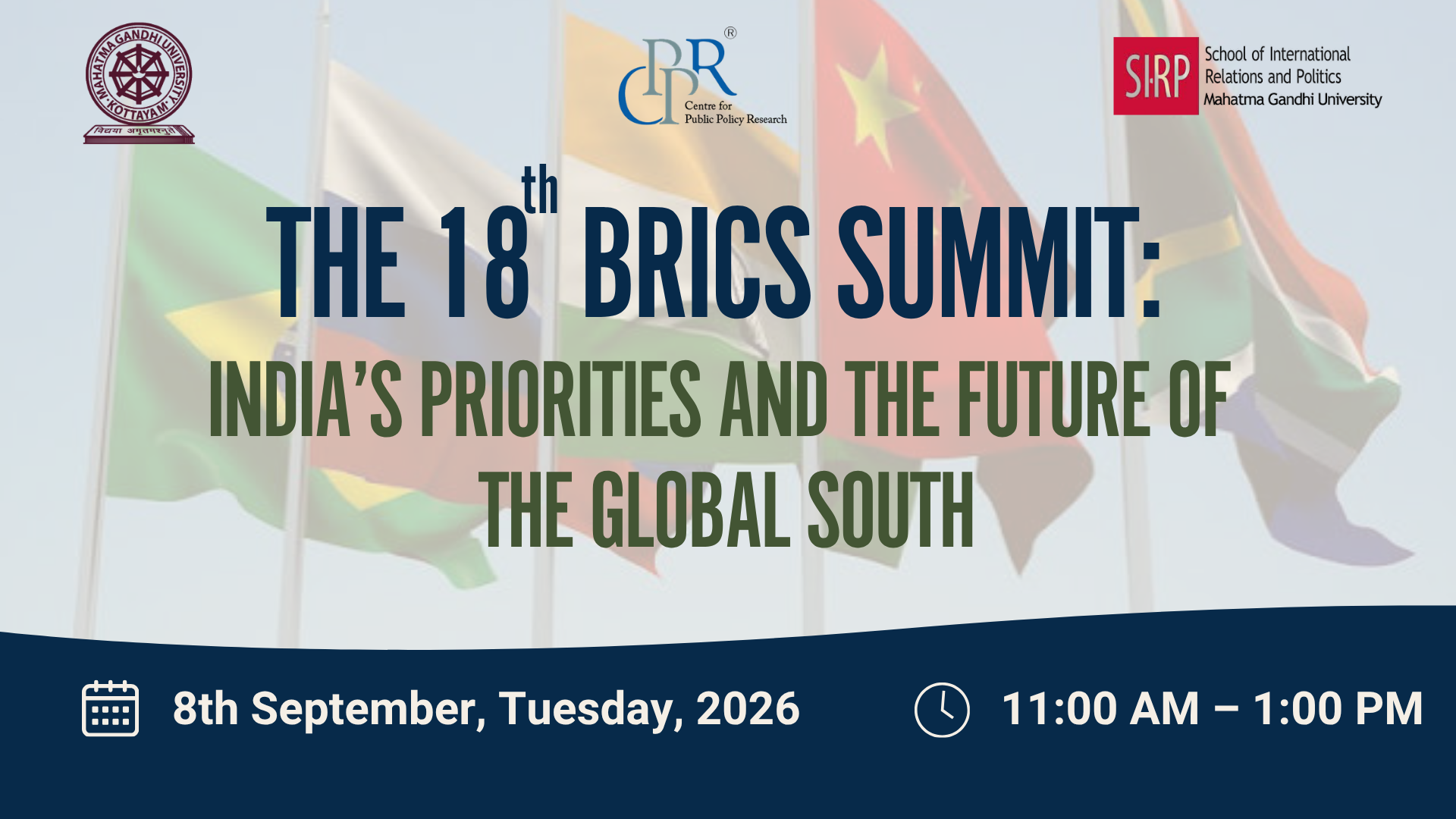
Half-Day Roundtable
On
The 18th BRICS Summit
India’s Priorities and the Future of the Global South
8th September, Tuesday, 2026
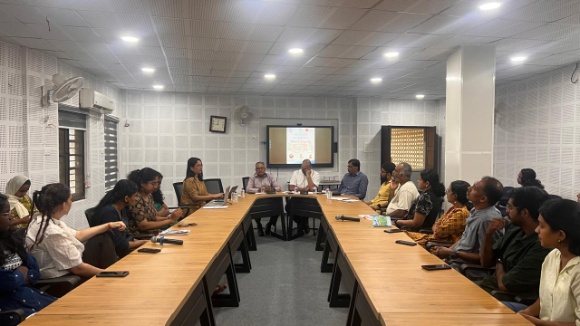
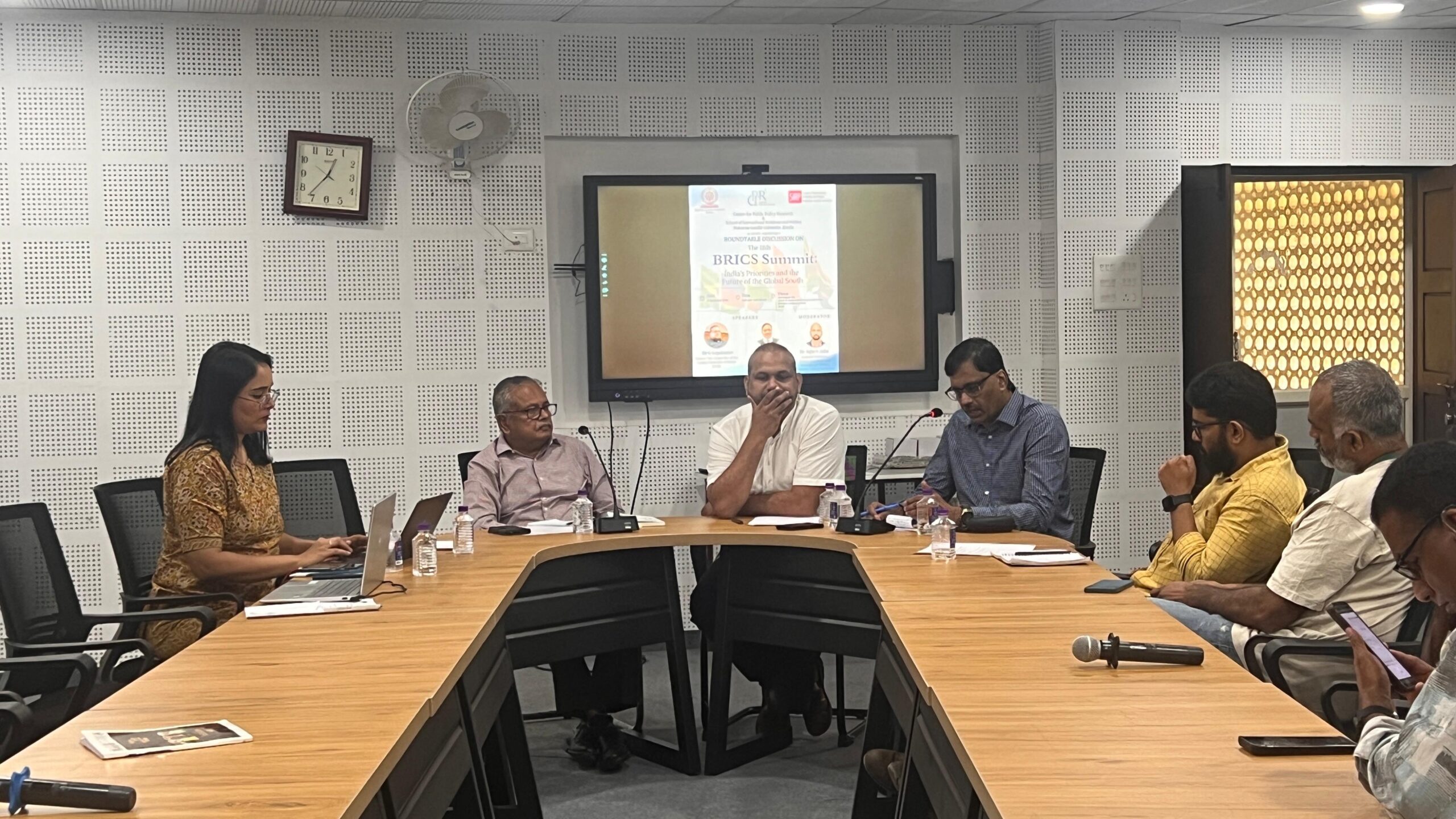
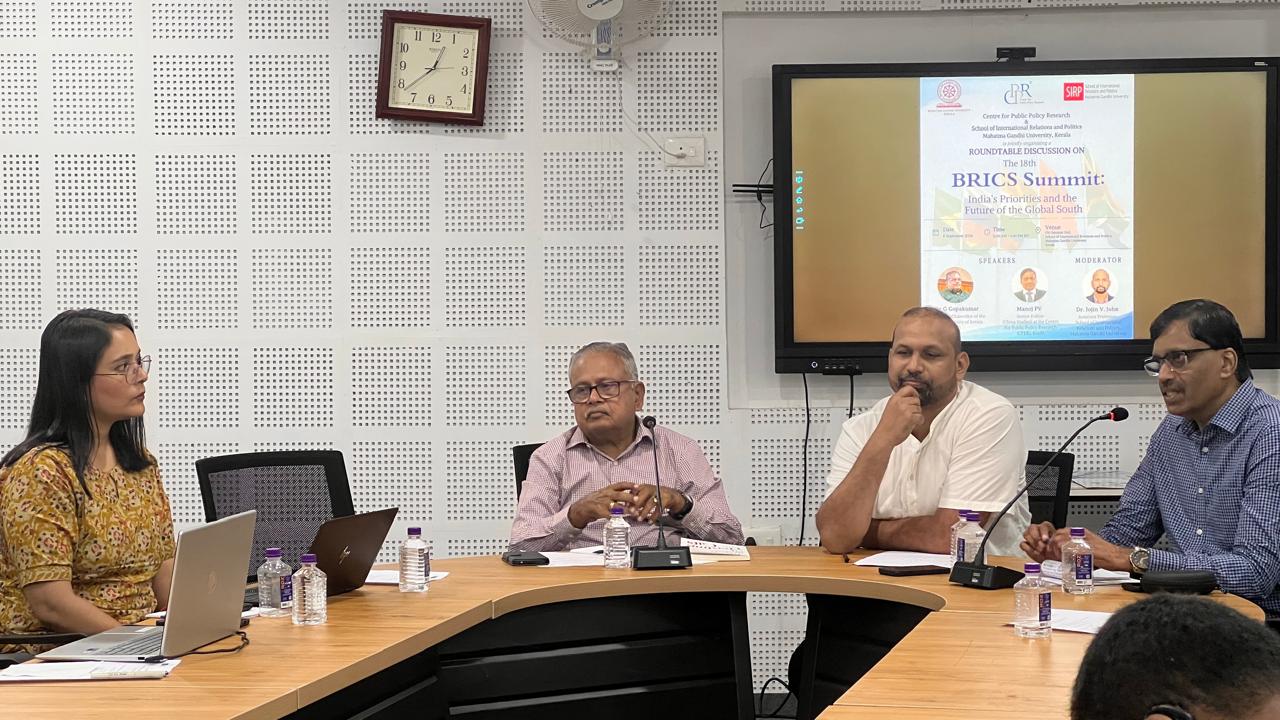
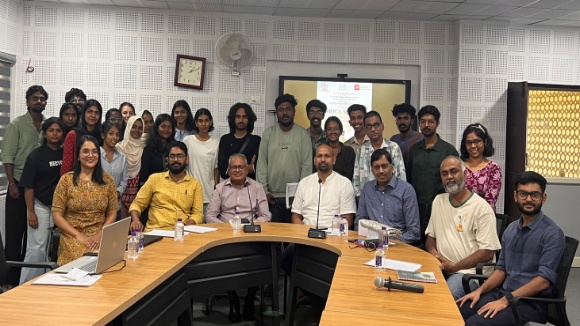
The Centre for Public Policy Research (CPPR), Kochi, in collaboration with Mahatma Gandhi University (MGU), Kerala, organised a stakeholder roundtable on “The 18th BRICS Summit: India’s Priorities and the Future of the Global South.”
The event brought together BRICS experts to assess the key priorities emerging from India’s Chairship and deliberate on what India should seek to deliver at the 18th BRICS Summit in New Delhi.
An expanded BRICS now spans a wider and more diverse set of political and economic interests, raising questions about whether the grouping could develop greater coherence even as it grew. As India prepared to host the 18th BRICS Summit in New Delhi, discussions focused on how its choices on agenda-setting, deliverables, and priorities could shape not only the immediate outcomes of its Chairship but also BRICS’s longer-term relevance as a platform for the Global South.
The roundtable brought together policymakers, academics, and researchers to deliberate on the future direction of an expanded BRICS, India’s priorities and deliverables at the Summit, BRICS’s potential to advance development, trade, and South-South cooperation, and how India could balance its engagement with BRICS and its strategic autonomy amid its relationships with the US, Europe, and the Indo-Pacific.
The roundtable also aimed to generate a concise brief capturing key insights and recommendations on India’s BRICS Chairship and the grouping’s future direction, along with identifying 3–4 priority areas for post-summit engagement between India and BRICS members to inform CPPR’s subsequent research and policy work.
Speakers:
Dr. G. Gopakumar, Former Vice-Chancellor of the Central University of Kerala (CUK).
Mr. Manoj P.V, Senior Fellow (China Studies) at CPPR, Kochi.
Moderator:
Dr. Jojin V John, Assistant Professor at the School of International Relations and Politics, Mahatma Gandhi University (MGU), Kerala.
Key Takeaways:
- Nature and Evolution of BRICS: BRICS lacks a formal charter or secretariat, operating instead through parallel institutions like the NDB. Since 2022, it has grown more geopolitical and anti-Western, evolving from a pressure group into a self-styled vehicle for Global South unity and multipolarity.
- Institutionalisation and Internal Coherence: Formal institutionalization looks increasingly likely, but BRICS still lacks the cohesion seen in blocs like ASEAN. Diverse interests among BRICS Plus members and tension over its identity, and emerging-economy alliance vs. anti-Western bloc remain unresolved.
- Geopolitical Context: The 18th BRICS Summit unfolds amid ~25 active conflict zones, including Russia-Ukraine and West Asia. Pro-US members like Saudi Arabia and the UAE have flagged concerns over US actions in the region, while Trump-era tariff wars add pressure on Global South cohesion.
- India’s Strategic Positioning: India balances Western ties with Global South solidarity, seeking China-Russia backing for a UNSC seat, defending South Africa’s G20 membership, and championing counter-terrorism cooperation dating to its 1993 UN convention proposal. India’s stance across Kazan (2024) and Rio (2025) summits has stressed diplomacy over conflict and continued BRICS evolution.
- India-China Relations: Ties remain in a delicate post-Galwan recovery, aided by a recent 400-member Chinese business delegation, though border disputes and trust deficits persist. A proposed joint communique at the Summit could signal tangible cooperation despite differences.
- Technology, AI, and De-dollarisation: China’s WAICO initiative highlights its AI lead, pushing India toward a clearer AI governance stance and greater investment, alongside promoting “Responsible AI.” Discussions also covered de-dollarization tools (CRA, CDFO) and India’s UPI as a model payment system for BRICS.
- Emerging Cross-Cutting Concerns: Critical minerals remain a flashpoint amid Chinese export curbs. AI-driven data-center growth’s water/climate strain, widening economic gaps from globalization, and aggressive nationalism were flagged as broader risks to unity.
- Measuring Success: BRICS should avoid excessive politicisation and focus on raising Global South concerns through dialogue. Its success should be judged not by membership size or declarations, but by its ability to deliver tangible outcomes.
Details of the speakers:
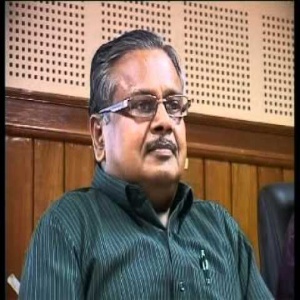 Dr. G. Gopakumar
Former Vice-Chancellor of the Central University of Kerala (CUK).
Dr. G. Gopakumar is an Indian political scientist, psephologist, and academic who served as the Former Vice-Chancellor of the Central University of Kerala (CUK). With over 40 years of distinguished experience in higher education, he previously functioned as the Dean of Social Sciences and Head of the Department of Political Science at the University of Kerala. He has received prestigious international honors, including the Fulbright-Nehru Award and the Shastri Indo-Canadian Fellowship, and has published numerous books and academic articles specializing in comparative politics, state politics, and electoral studies.
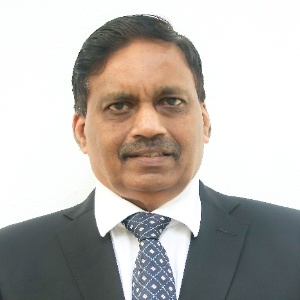 Mr. Manoj P.V
Senior Fellow (China Studies) at CPPR, Kochi.
Mr. Manoj P.V is a Senior Fellow (China Studies) at the Centre for Public Policy Research (CPPR), Kochi. His research focuses extensively on India-China bilateral relations, Chinese defense laws, global AI governance, and the macroeconomic frameworks of the Global South. He is a frequent commentator on maritime economics and regional strategic alignments, contributing analytical columns and opinion pieces to leading national publications like The Week and Malayala Manorama.
Moderator:
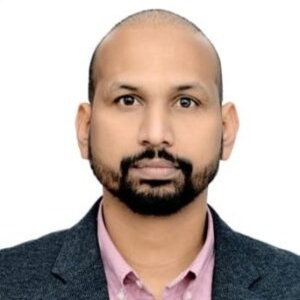 Dr. Jojin V John
Assistant Professor at the School of International Relations and Politics
Mahatma Gandhi University (MGU), Kerala.
Dr. Jojin V. John is an Assistant Professor at the School of International Relations and Politics, Mahatma Gandhi University (MGU), Kerala, where he also serves as the Director of the Korea Centre. He is additionally a Senior Fellow at CPPR, specializing in East Asian geopolitics, Indo-Pacific security architectures, and para-diplomacy. Prior to joining MGU, he was a Research Fellow for East Asia at the Indian Council of World Affairs (ICWA) and held visiting research positions at renowned institutions in Seoul, Taipei, and New Delhi. He holds a PhD from Jawaharlal Nehru University (JNU).
A few snapshots from the event!