
Podcasts

Takaichi Wins Historic Mandate: The Prospect of Japan Becoming Normal
March 13, 2026
India’s BRICS Presidency, South Asia and Future of Regional Cooperation
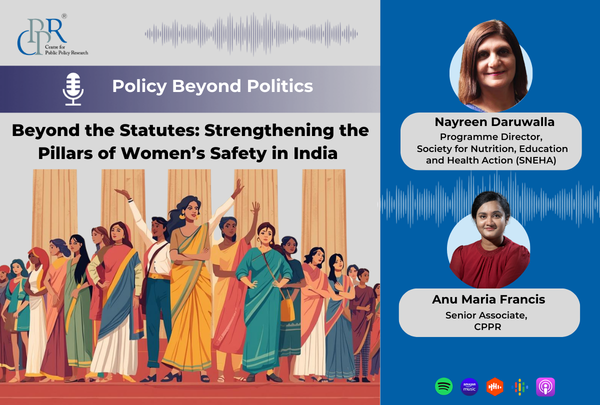
March 17, 2026Ep 72| Beyond the Statutes: Strengthening the Pillars of Women’s Safety in India
INTRODUCTION & RATIONALE
As India approaches International Women’s Day, public discourse often revisits the legal architecture designed to protect women, including laws addressing domestic violence, sexual harassment, trafficking, and workplace discrimination. Over the past two decades, legislative reform has expanded significantly. Yet, persistent gaps remain between statutory guarantees and lived realities.
Incidents of violence, delays in judicial processes, uneven enforcement, under-resourced institutions, and social stigma continue to shape women’s access to justice and safety. The question, therefore, is not merely whether adequate laws exist, but whether the institutional pillars that support these laws are robust, accessible, and responsive.
This podcast seeks to move beyond a statute-centric conversation and examine the ecosystem that sustains women’s safety. It situates the discussion within broader institutional, administrative, and socio-economic frameworks, particularly focusing on implementation, coordination, and accountability.
Key Objectives
The episode aims to:
- Analyse the effectiveness of integrated, community-embedded institutional mechanisms in responding to violence against women and children.
- Examine how prevention-oriented, public health frameworks implemented in informal urban settlements can inform broader state-level reform.
- Evaluate the role of fiscal commitments, including Union Budget 2026 allocations, in strengthening decentralised safety infrastructure and frontline service delivery.
- Identify pathways for scaling survivor-centred, data-driven, and community-accountable models of violence prevention.
Podcast Feature
A discussion on existing schemes, programmes, and policies addressing violence against women in India, with particular attention to:
- The interface between community-based prevention models and formal state institutions.
- The implications of women’s safety for labour force participation, economic agency, and urban inclusion
Key Discussion Themes and Questions
1. From Legal Provisions to Community-Embedded Systems
While India has enacted robust legal frameworks addressing domestic violence, sexual offences, and child protection, how effectively are these translated into accessible support within informal settlements and low-income urban communities?
How can lessons from SNEHA’s model of crisis intervention centres located within public hospitals inform systemic strengthening at the police, healthcare, and judicial levels?
Where do institutional bottlenecks persist in referral pathways, survivor follow-up, and inter-agency coordination?
2. Violence as a Public Health and Community Issue
SNEHA conceptualises violence not merely as a criminal justice issue but as a public health concern embedded in socio-economic vulnerability.
How do community mobilisation, behavioural change initiatives, and trust-building within informal settlements alter reporting patterns and survivor outcomes?
3. Institutional Convergence and Survivor-Centred Accountability
SNEHA’s work demonstrates the importance of coordinated action among healthcare providers, police personnel, protection officers, and municipal authorities.
What structural reforms are required to institutionalise such convergence beyond project-based interventions?
How can accountability mechanisms ensure that survivor dignity, confidentiality, and informed consent remain central within state systems?
4. Fiscal Priorities and the Union Budget 2026
From the perspective of grassroots implementation, do current budgetary allocations adequately reflect the scale and complexity of violence prevention in high-density urban settlements?
Are investments in one-stop centres, shelter homes, counselling services, hospital-based crisis units, and capacity building sufficient and sustained?
How might fiscal policy better support preventive and community-led interventions rather than primarily reactive measures?
5. Data Systems, Monitoring, and Long-Term Impact
SNEHA’s programmes rely on systematic documentation, case tracking, and evidence generation.
How can government data systems move beyond aggregate incident reporting to track case progression, service quality, survivor recovery, and recurrence prevention?
What institutional mechanisms are required to integrate community-level data into state policy design and budgetary prioritisation?
6. Women’s Safety and Economic Participation
In contexts of urban poverty, violence directly constrains women’s mobility, workforce participation, and economic autonomy.
How can safety infrastructure be conceptualised as an enabling economic investment rather than solely as a welfare expenditure?
What linkages should be strengthened between violence prevention services and livelihood, skills training, and social protection schemes to enable sustainable exit pathways for survivors?
PROFILE OF PANELLISTS
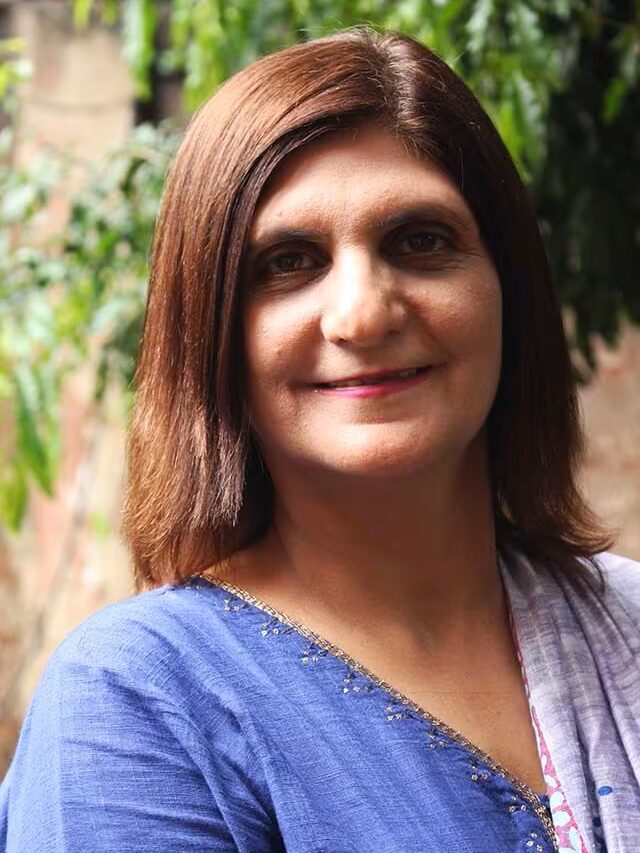
Nayreen Daruwalla
Programme Director, Society for Nutrition, Education and Health Action (SNEHA)
Dr. Nayreen Daruwalla is a public health researcher, psychologist, and social sectorleader with over 25 years of experience working with urban poor communities in India to address gender-based violence (GBV), mental health, and sexual and reproductive health. She currently serves as Director – Prevention of Violence against Women and Children, Research Partnership and Scaling at SNEHA (Society for Nutrition, Education and Health Action), Mumbai.
Dr. Daruwalla has played a pioneering role in conceptualising and implementing large-scale, evidence-based interventions to prevent violence against women and children, particularly in informal urban settlements. With a background in clinical psychology and a doctorate in social psychology, her work focuses on integrating gender justice, mental health, and public health systems through community
mobilisation, institutional strengthening, and policy engagement.
At SNEHA, she developed and led the organisation’s flagship program on Prevention of Violence against Women and Children, establishing 11 crisis intervention and counselling centres across Mumbai, including services within major public hospitals. She has also led efforts to integrate gender-based violence prevention within maternal and child health programs and community health initiatives, strengthening
the continuum of care for survivors.
Dr. Daruwalla has extensive experience in designing, managing, and evaluating complex research and intervention programs, including cluster randomised controlled trials, qualitative research, and community-based participatory studies. She was the lead investigator for the landmark SNEHA–TARA cluster randomised controlled trial conducted with University College London, one of the first large-scale
trials globally examining community mobilisation to prevent violence against women and girls.
Her work also includes leading the NIHR Global Health Research Group project on mental health support for survivors of violence in South Asia, where she co-developed the GARIMA web-based mental health support package for counsellors and frontline workers. She has designed several innovative interventions including GIS-based tools for responding to violence cases, integrated mental health counselling models, and training curricula for police and community stakeholders on responding to gender-based violence.
Beyond program leadership, Dr. Daruwalla has successfully mobilised and managed multi-million-dollar research and implementation grants from leading global and national funders including Wellcome Trust, NIHR UK, UNICEF, Azim Premji Foundation, UNFPA, USAID, and the Government of Maharashtra. Her research has been widely published in leading journals such as The Lancet Global Health, BMJ Global Health, and BMC Public Health, contributing significantly to the evidence base on community mobilisation, gender norms, mental health, and violence prevention in low- and middle-income countries.
Dr. Daruwalla actively contributes to policy and academic institutions, serving on multiple ethics committees and advisory boards including the Government of Maharashtra Women and Child Welfare Committee. Her work has been recognised through several awards, including the Karamveer Puraskar, Woman of the Year (Zonta International), and the Pearl Wave Real Woman of Honour Award for her
contributions to gender justice and social change.
#PolicyBeyondPolitics is available on
