EP.6 -The Global High Tea Series | From Energy to Knowledge: India–GCC Cooperation in Higher Education, Science and Technology

EP.6 -The Global High Tea Series | From Energy to Knowledge: India–GCC Cooperation in Higher Education, Science and Technology
| Event Start Date: September 9, 2026 | Event End Date: September 9, 2026 | Event Venue: YouTube |
EP.6 – The Global High Tea Series | From Energy to Knowledge: India–GCC Cooperation in Higher Education, Science and Technology
Introduction
The major focus was on how higher education, science and technology could become the next major pillars of India–GCC strategic cooperation, complementing the traditional energy and economic relationship. India and the Gulf Cooperation Council (GCC) countries share a long-standing relationship built on trade, energy, investment, people-to-people connections and extensive diaspora linkages. Traditionally, energy security and economic cooperation have occupied a central place in India–GCC relations. However, the relationship is increasingly evolving beyond hydrocarbons towards a broader partnership encompassing education, innovation, technology, research and human-capital development.
The GCC countries are pursuing ambitious national transformation and economic diversification strategies, with knowledge, innovation, digitalisation and advanced technologies emerging as important pillars of their development agendas. At the same time, India has emerged as a major global hub for higher education, information technology, scientific research, entrepreneurship and skilled human resources. These complementary strengths create significant opportunities for a deeper India–GCC knowledge partnership.
Higher education can serve as an important bridge between India and the GCC. Universities, research institutions and technical institutes can facilitate student and faculty mobility, joint academic programmes, collaborative research, knowledge exchange and industry-academia partnerships. Cooperation in areas such as artificial intelligence, biotechnology, renewable energy, space technology, quantum technologies, semiconductors, cybersecurity and digital transformation could further expand the relationship.
The emergence of initiatives involving Indian institutions in the Gulf also demonstrates the potential for a more institutionalised educational partnership. The establishment of IIT Delhi–Abu Dhabi, for example, reflects the growing interest in connecting India’s higher education capabilities with the GCC’s ambition to develop globally competitive knowledge ecosystems.
Key Takeaways
- Strategic Complementarity Between India and the GCC
As GCC states diversify beyond hydrocarbons, India’s young technical talent and quality higher education institutions such as IITs, IIMs, and private universities such as BITS Pilani, Manipal, and Amity, position it as a natural knowledge partner. GCC capital combined with Indian scientific and research capacity creates a complementary relationship, extending rather than replacing existing India-GCC energy cooperation.
- From Student to Research Mobility
Cooperation should evolve beyond student exchange toward joint research and doctoral programs, with each GCC state developing its own research specialisation. Scholarships, fellowships, faculty exchange, and expanded student mobility were identified as key mechanisms to deepen this shift.
- Renewable Energy and Desert Technology as Shared Ground
India’s experience in large-scale solar energy projects, combined with Gulf climatic conditions, presents significant potential for joint renewable energy development. However, GCC-shared technology tends to be established rather than cutting-edge, reflecting continued Gulf reliance on Western technological leadership which is an area where India’s own self-reliance ambitions could offer an alternative model.
- Priority STEM Fields and Sensitivities
Focus areas include AI, chip design and manufacturing, semiconductors, quantum engineering, and space technology. STEM will be favoured over social sciences and humanities, given the GCC’s late entry into the latter fields and their potential political sensitivities.
- Institutionalization as a Precondition for Deeper Cooperation
Sustained collaboration requires institutional frameworks connecting universities, think tanks, and government research bodies, not just individual partnerships. Public universities, alongside campuses funded by business conglomerates, both have roles to play in building this ecosystem.
- Financing and the Brain Drain Challenge
India holds talent, but the Gulf and West hold capital, driving continued brain drain. Collaboration between Indian conglomerates and Gulf sovereign wealth funds alongside growing Indian government trust in private-sector involvement in manufacturing and defence could help build funding channels that retain and leverage Indian talent domestically.
- Knowledge as a Diplomatic Tool
Education and knowledge exchange were framed as a form of diplomacy in their own right, with a rising knowledge economy dependent on individuals with advanced higher education. This requires a clear “mission path,” similar to Europe’s Erasmus model, with defined plans, policies, and timelines customized to each GCC country’s specific needs including AI and technology applications, from healthcare to education.
Speaker
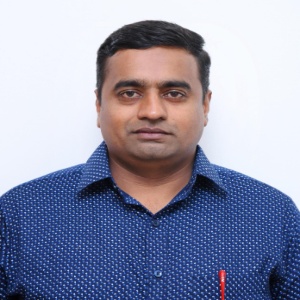 Dr Nanda Kishor M. S.
Associate Professor
Head of the Department of Politics and International Studies
Pondicherry University
Dr. Nanda Kishor M. S. is Associate Professor and Head of the Department of Politics and International Studies at Pondicherry University apart from holding the Sri Aurobindo Chair. He holds an M.Phil. and Ph.D. in Political Science from the University of Hyderabad and completed his postdoctoral research at Leiden University, the Netherlands, under the Erasmus Mundus Fellowship of the European Union. His teaching and research span geopolitics, international relations, Indian foreign policy, strategic studies, terrorism, and the Indian Knowledge System. He has published extensively in peer-reviewed journals and edited volumes on these subjects. Dr. Kishor is a frequent speaker at leading academic and professional institutions, including the Defence Services Staff College (DSSC Wellington), Indian Naval Academy, College of Air Warfare, and Karnataka Police Academy. His current research focuses on developing indigenous Indian approaches to international relations, strategic culture, statecraft, and foreign policy by drawing upon India’s civilizational and intellectual traditions. He is an IVLP from the US State Department, DAAD from the German Government, Erasmus Mundus from European Union and SJRF from UNHCR, Brookings, Govt of Finland and MCRG. Speaks 7 languages.
Moderator
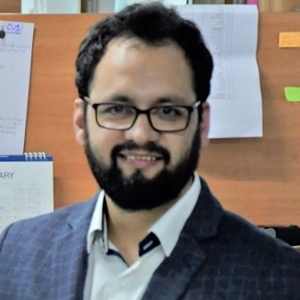 Mr Gazi Hassan
Research Scholar, International Politics
Centre for Public Policy Research
Gazi Hassan is a Research Scholar of International Politics. He has an MPhil in International Studies from MMAJ Academy of International Studies in Jamia Millia Islamia University, New Delhi. He was previously associated as Senior Research Associate with CPPR- Centre for Strategic Studies. Mr Hassan’s research focuses on the Indo-Pacific, particularly exploring geopolitical dynamics, developments related to trade, terrorism, the role of various actors and including the security dynamics of the region. He has also worked as a researcher at the Vivekananda International Foundation, New Delhi and has been contributing articles to SADF (Brussels) and various online platforms like Foreign Policy News (US), The Quint (New Delhi), among many others.