
Articles

Study Highlights Gap Between Assault Cases Filed by Women and Justice Delivery in India
March 10, 2026
Ep 72| Beyond the Statutes: Strengthening the Pillars of Women’s Safety in India
March 13, 2026Takaichi Wins Historic Mandate: The Prospect of Japan Becoming Normal
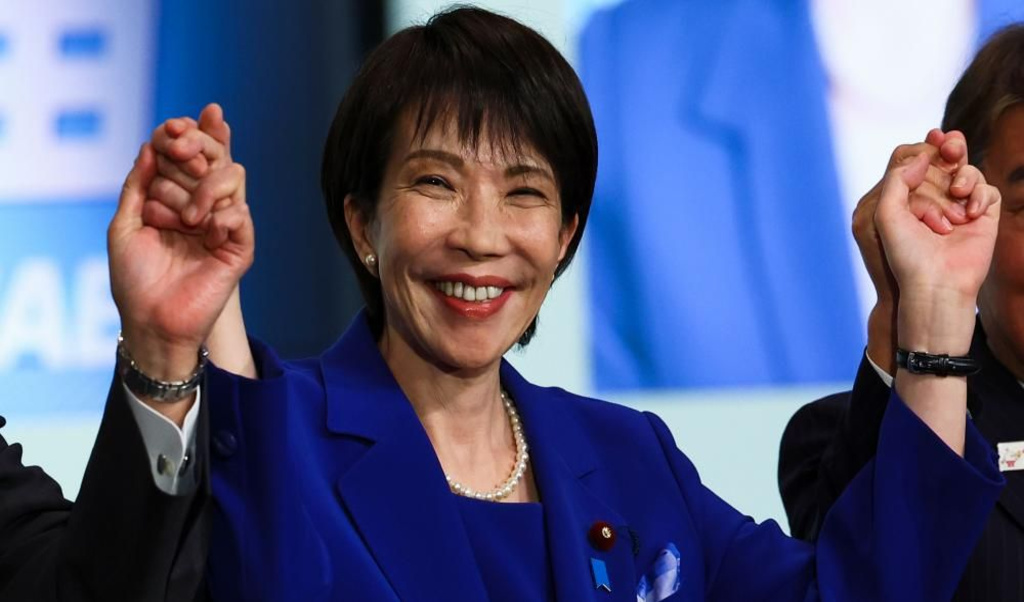
Sanae Takaichi, who became Japan’s first female Prime Minister in October 2025, in the recent snap general elections has led the ruling Liberal Democratic Party (LDP) to its most decisive electoral victory. Winning 316 seats and securing a two-thirds majority in the Japanese Lower House, she has not only consolidated her position but emerged as the most powerful prime minister of the post-war period. Amid external uncertainty compounded by Chinese assertiveness and Trump’s unpredictability, she presented voters with a stark choice: her leadership or chaos. Running explicitly on a populist platform, Takaichi’s strategy of offering personality over policy, stability over substance, proved extraordinarily effective with an electorate anxious about regional security and economic stagnation. Takaichi now has a real opportunity to realise the longstanding vision of Japanese conservatives including her mentor former Prime Minister Shinzo Abe to remake Japan’s postwar identity as an ‘abnormal state’ constrained by constitutional pacifism.
In the run-up to the elections, a resurgent LDP under Takaichi’s leadership ended its two-decade-old coalition with the moderate Komeito and found a new partner in the Japan Innovation Party, a right-wing political party that shares her nationalist and revisionist agenda. This coalition realignment fundamentally transformed Japan’s political landscape, while accelerating the LDP’s rightward march. Komeito joined hands with the leading opposition force, the Constitutional Democratic Party (CDP), to float a new centrist political part, the Centrist Reform Alliance (CRA). But the opportunistic merger with little ideological coherence failed to provide an alternative to Takaichi’s populist brand of politics. In a devastating defeat, their combined strength of 172 seats before the election fell to a mere 49, resulting in the resignations of both party co-leaders.
Takaichi’s electoral victory heralds a significant transformation in Japan’s overall policy direction, especially in its international posture. With a supermajority in the Diet, Takaichi now has a genuine opportunity to make Japan a “normal” country—a term that refers specifically to revising Article 9 of the Japanese Constitution. This provision, which renounces war as an instrument for resolving international disputes and refuses to recognize the Self-Defense Forces as a military, has defined Japanese identity over the last eight decades. While Japan’s security posture has changed significantly, especially under Abe, constitutional and legal obstacles have continued to constrain what Japan can do militarily.
The electoral mandate provides Takaichi the numbers to initiate constitutional revision, but political and institutional barriers still loom large. The two-thirds majority in the lower house meets one crucial threshold, but the ruling coalition currently lacks similar strength in the House of Councillors, which is scheduled to undergo elections two years later. Furthermore, Takaichi’s current electoral mandate is largely a reflection of the voters preference for political stability rather than for constitutional revision. The constitutional revision will ultimately require a national referendum, and Takaichi would be cautious in staking her political capital in pushing the agenda that may create deep societal polarisation and invite political backlash. Still, Takaichi’s supermajority enables her to reshape Japan’s security policy in ways previously impossible. She can override upper house objections to defense legislation, accelerate military spending to reach the two percent of GDP target, and reinterpret existing constitutional constraints more aggressively.
Following firmly in the footsteps of Shinzo Abe on Japan’s foreign and security policy, Takaichi’s priorities will be to strengthen alliance relations with the United States and enhance Japanese deterrence against Chinese assertiveness. Her agenda includes expanding Japan’s defense capabilities, deepening security cooperation with like-minded democracies, and assuming greater regional security responsibilities commensurate with Japan’s economic power. This approach will see more emphasis on the Indo-Pacific and proactive strengthening of India-Japan relations, especially significant given Trump’s apparent de-prioritization of the Indo-Pacific. Takaichi has reaffirmed her commitment to Abe’s Free and Open Indo-Pacific vision while explicitly calling for upgrading the India-Japan partnership to a “quasi-alliance”—the highest level of security cooperation for Japan other than its alliance with US. For India, a fully empowered Japan will present remarkable strategic opportunities in deeper bilateral defence industrial collaboration including advanced technology access and as an indispensable partner in Indo-Pacific.
Takaichi’s historic mandate has opened possibilities for Japan’s transformation that seemed remote even months ago. Yet significant uncertainties remain. Takaichi’s hawkish China rhetoric during the election campaign may prove unsustainable when governing realities demand managing deep economic ties and regional stability. Domestically, a hurried push for constitutional revision could fracture society and trigger fierce opposition, given Japanese public opinion on abandoning pacifism remains deeply divided. Whether Japan truly sheds its postwar identity depends less on parliamentary numbers than on navigating domestic resistance, regional anxieties, and the fundamental question of whether voters embrace normalization.
Dr Jojin V. John is a Senior Fellow at CPPR and an Assistant Professor at the School of International Relations and Politics, Mahatma Gandhi University.
Views expressed by the authors are personal and need not reflect or represent the views of the Centre for Public Policy Research (CPPR).

Jojin V John
Dr. Jojin V. John is an Assistant Professor School of International relations and Politics at Mahatma Gandhi University, Kerala. He has several publications to his credit, including monographs, book chapters and articles that appeared in academic journals, including Copenhagen Journal of Asian Studies, China Report, The Journal of International Relations, Strategic Analysis, India Quarterly and Area Studies.
