
CPPR Webinar Series
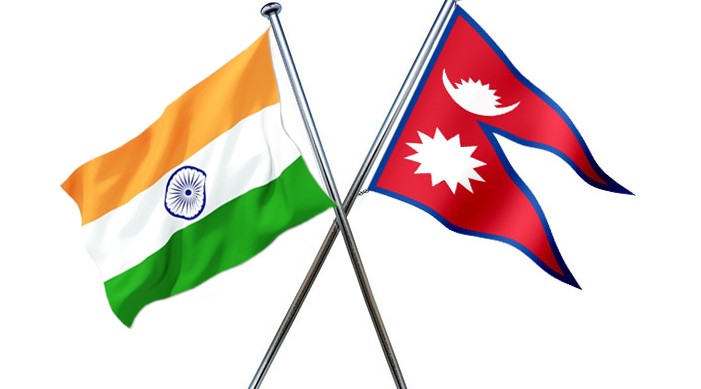
Background: As close neighbours, India and Nepal have fostered a unique friendship and collaborative relationship marked by open borders and deep-rooted people-to-people kinship alongside extensive cultural linkages, dating back to the 1950 Treaty of Peace and Friendship. Bilateral relationships forged via trade and investment, culture, defence and energy cooperation have resulted in reciprocal national prosperity and regional advancement for decades. However, Nepal is sandwiched between the growing powers of India and China, where regional vulnerabilities and pro-Beijing regimes have resulted in an increase in territorial disputes and a decline in bilateral cooperation and collaboration.
Pushpa Kamal Dahal “Prachanda” has become Prime Minister for the third time after leaving his previous coalition and gaining the backing of the Communist Unified Marxist-Leninist Party (UML). Prachanda’s government, with the backing of the preceding PM K P Sharma Oli, reaffirmed that Nepal is looking to maintain equi-proximity relationships with both India and China, with the nation intending to focus on containing inflation, maintaining reserves, raising capital expenditures, narrowing the trade deficit, and lowering interest rates as part of its national agenda. However, there exists contradicting rhetoric as KP Oli continues to advocate for the recovery of national territory claimed by India, referencing the 2015 territorial disputes. KP Sharma Oli previously aimed to build ties with China as an alternative to Nepal’s long-standing tight trading ties with India. Furthermore, under KP Oli, India’s bilateral ties with Nepal were strained as India inaugurated an 80-kilometre-long strategically significant route connecting the Lipulekh pass with Dharchula in Uttarakhand in 2020. From India’s point of view, the continuation of the former Sher Bahadur Deuba-led administration had been the optimum environment for developing bilateral prosperity and partnership, with a decline in China’s looming influence. Within this context, the Nepali Congress had long had links with India, and under Deuba’s leadership, India-Nepal ties began to improve rapidly and significantly.
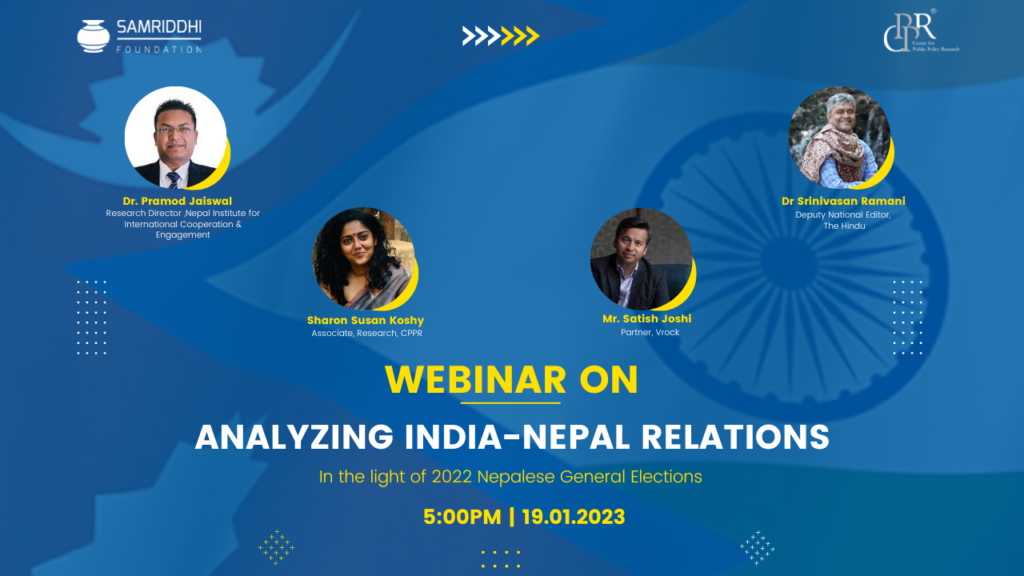
With rising tensions in India-Nepal relations due to border disputes, China’s growing regional influence, and the need to strengthen collaboration and cooperation, this webinar will investigate the future trajectory of the Indo-Nepal relationship, particularly in relation to Beijing’s influence alongside economic and political ties.
Moderator: Sharon Susan Koshy
Summary of Discussions
Within Prachanda’s regime, Kathmandu and Delhi are pushing for a cordial and collaborative relationship with regard to territorial conflict and disputes. Thus, both nations must convene, resolve and mutually investigate conflict surrounding disputed territories, in order to prevent the disintegration of historically strengthened bilateral relationships. India and Nepal must look to enhance bilateral relations within the three tenets of mutual growth. Firstly, there must be a focus on the energy sector, where the new government seeks to bolster energy trade ties with India, primarily in regard to clean energy and climate change concerns. Secondly, defence cooperation must continue to act as the bedrock of robust bilateral relations, due to India’s substantial defence presence, especially in equipment and training in Nepal. Thirdly, revitalising mutual and global connectivity is of paramount importance, particularly within the need to strengthen the socioeconomic rubric of Nepal. India and Nepal must seek to emphasise and prioritise these aspirations in order to ameliorate mutual relations, especially due to China’s deepening presence within Nepal. India and Nepal must look to carry the existing bilateral relationship to greater heights. This must be particularly emphasised within strong and significant trade and economic relations, technological initiatives, tourism, regional and mutual development and more, which seeks to transcend time and culture.
Key Takeaways
- Bilateral collaboration and cooperation between India and Nepal is vital in order to tackle regional and geopolitical conflict, where mechanisms must be brought together to ease territorial disputes and seek engagement at the bilateral level. Thus, mutual relations must transition into prioritising growth and connectedness, instead of highlighting the politicisation of bilateral relationships especially those with decades of shared history.
- India and Nepal must prioritise the need for enhancing connectivity in Nepal on a regional and international scale. Hence, India and Nepal must seek to concretise present and future mutual development projects, with declining prominence upon the competitive game angle within the geopolitical fabric.
- Dynamic bilateral energy and trade relations are pivotal to enhancing the India-Nepal relationship. Thus, There is a need to focus on clean energy, renewable resources such as hydropower, resource sharing and management alongside initiatives targeting climate change. Hence, shared history, unrivalled geopolitical closeness and mutual energy interests must continue to strengthen the bilateral relationship.
Speakers:
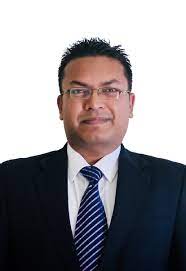
Dr. Pramod Jaiswal
Dr. Pramod Jaiswal is a Research Director at Nepal Institute for International Cooperation and Engagement. He specializes on China and South Asia and has done extensive work on Chinese Foreign Policy, China’s South Asia Policy and China’s ambitious Belt and Road Initiative (BRI). His research focus also includes insurgencies, border management, terrorism, illegal migration, radicalism, and ethnic conflicts. He has been a regular and visiting faculty at different universities of Nepal (Tribhuvan University, Kathmandu University, Pokhara University and Army Command and Staff College) and China (China Foreign Affairs University, Fudan University, Tongji University, and Qinghai University of Nationalities). He is Visiting Fellow at Sandia National Laboratories, Cooperative Monitoring Center, Albuquerque, New Mexico, US; Senior Fellow at the Institute of Peace and Conflict Studies, New Delhi and Researcher at South Asian Studies, Institute of Asian Studies, Chulalongkorn University, Bangkok. Previously, he has worked with Manohar Parikkar Institute for Defence Studies and Analyses, New Delhi and as Delhi Correspondent with the Rising Nepal. He is the Member of the Editorial Board, Journal of International Affairs, Kathmandu; Member of the Academic Committee at the Pangoal Institution, Beijing; Member of International Advisory Committee, Journal of Liberty and International Affairs, Macedonia; and the Editor in Chief of Journal of Security and International Studies and member of Subject Committee of International Relations and Diplomacy, Tribhuvan University. He holds Masters, M. Phil and PhD from School of International Studies, Jawaharlal Nehru University, New Delhi. He has authored, edited and co-edited around dozens of books on China and South Asia affairs.
Mr. Satish Joshi
Satish’s career has been primed with several senior level roles with a focus specifically on energy infrastructure, including clean and renewable energy and transmission, real estate, fund management, capital markets, and mergers & acquisitions. Satish’s career began as a cash-flow management expert for a firm in a consumer staples industry, in Angwin, California, USA. Over 18 years, Satish has been traversing over issues such as cross border electricity trade, negotiating foreign investments worth more than US$2 billion in major energy infrastructure, and in the process, oversaw development of a groundbreaking set of agreements and standards, unprecedented in emerging markets. He currently runs an organization named Drishti, a citizen initiative to advocate for clean air, dispel myths and create awareness around serious effects of pollution on health and environment. The organization has installed several air quality measuring devices that report real-time data on air quality, accessible to the public and policy makers. Satish is a Certified Financial Analyst (CFA) professional and has a Bachelor of Business Administration and Bachelor of Applied Mathematics, summa cum laude from Pacific Union College in Angwin, California, USA
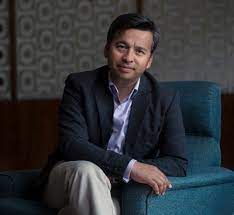

Dr Srinivasan Ramani
Dr Srinivasan Ramani is deputy national editor, The Hindu newspaper. He anchors the opinion, data and explanatory journalism sections of the newspaper. His doctoral thesis was on India-Nepal relations between 1990 and 2009 -a period that coincided with the transition of Nepal from a constitutional monarchy to a republic.
.
write to us : [email protected]