
EP.8 -The Global High Tea Series | India-GCC Cooperation in AI: Building a Shared Ecosystem for Innovation, Talent and Responsible Digital Transformation

EP.8 -The Global High Tea Series | India-GCC Cooperation in AI: Building a Shared Ecosystem for Innovation, Talent and Responsible Digital Transformation
| Event Start Date: October 6, 2026 | Event End Date: October 6, 2026 | Event Venue: YouTube |
EP.8 – The Global High Tea Series | India-GCC Cooperation in AI: Building a Shared Ecosystem for Innovation, Talent and Responsible Digital Transformation
Introduction
Artificial Intelligence (AI) is rapidly becoming a strategic driver of economic growth, technological innovation, public-service delivery and national competitiveness. For India and the Gulf Cooperation Council (GCC) countries, AI offers an opportunity to expand a relationship traditionally centred on energy, trade, investment and the Indian diaspora towards a broader partnership based on technology, knowledge and innovation. India brings significant strengths in software development, digital public infrastructure, a large technology talent pool, research capabilities and a growing startup ecosystem. GCC countries, meanwhile, are investing heavily in AI infrastructure, digital transformation, smart cities, education and emerging technologies. These complementary strengths create opportunities for the two sides to move beyond investment towards joint research, talent development, entrepreneurship and the development of AI-enabled solutions.
AI research and innovation can become an important pillar of this emerging partnership. Universities, research institutions, technology companies and innovation centres could collaborate in areas such as generative AI, robotics, semiconductors, cloud computing, cybersecurity, climate resilience, energy efficiency and public-service delivery. Talent and education will also play an equally significant role. Student, faculty and researcher exchanges, joint academic programmes, fellowships, training initiatives and collaborative laboratories could connect India’s large technical talent pool with GCC institutions, research infrastructure and investment opportunities.
AI also presents opportunities in healthcare, education and smart infrastructure. Cooperation could explore AI-assisted healthcare, telemedicine, personalised learning, intelligent transportation, urban planning, energy management, environmental monitoring and digital governance. These applications could provide practical avenues for demonstrating how AI can improve the efficiency and accessibility of public services. The growing AI start-up ecosystem provides another opportunity for deeper economic engagement. Indian start-ups could gain access to GCC markets and capital, while GCC technology ecosystems could benefit from India’s technical expertise and entrepreneurial networks. Start-up exchanges, joint accelerators, venture investment and innovation challenges could facilitate these connections.
At the same time, technological cooperation must be accompanied by responsible AI. India and the GCC can explore dialogue and cooperation on AI governance, data protection, privacy, cybersecurity, transparency and accountability, particularly as AI becomes increasingly integrated into critical sectors. Finally, capacity building will be essential to ensure that AI cooperation produces sustainable outcomes. Combining GCC investment and infrastructure with India’s technical expertise could support workforce reskilling, public-sector training, research capabilities, entrepreneurship and knowledge transfer.
Key Takeaways
- Complementary AI Capabilities: The GCC brings capital, energy, infrastructure, and strategic investment, while India offers strengths in software, AI deployment, and application development, creating strong complementarities for cooperation.
- Energy, Capital and Data Centres: Abundant energy, deep capital pools, and growing data-centre capacity give GCC countries a strong foundation for developing AI infrastructure for both domestic and international markets.
- Open Models and Shared Ecosystems: Open-weight models offer opportunities for India and the GCC to build accessible AI ecosystems, including shared tools, infrastructure, testing, and deployment capabilities that make models practically usable.
- Research and Regional Languages: Shared challenges around regional languages and AI localisation create opportunities for joint research, particularly between universities, research institutions, and technology companies.
- Talent and Knowledge Exchange: Research visits, student exchanges, and joint laboratories between Indian and GCC institutions can strengthen talent development and create mutually beneficial research opportunities.
- AI for Public Services: AI can help address state-capacity constraints in areas such as healthcare, education, and government services, supported by better digital systems, reliable data, and empowered frontline officials.
- Digital Public Infrastructure: India’s experience with DPI, digital identity, data exchange, and payments offers opportunities for collaboration with the GCC, including cross-border payments, UPI interoperability, and smarter urban governance.
- Opportunities for Indian Startups: GCC capital and growing AI demand can help Indian startups expand internationally, particularly by providing expertise in adapting and deploying AI systems across different markets.
- AI Safety and Evaluation: India and the GCC can collaborate on third-party evaluations, safety testing, cybersecurity, and governance frameworks to address risks associated with increasingly capable AI systems.
- Interoperability and Competition: AI adoption will require greater interoperability and vendor choice across models, chips, and cloud services, reducing dependence on concentrated providers and encouraging competition.
- Affordability and Access: Making AI widely accessible will require complementary investment in infrastructure, capital, and digital systems to ensure that the benefits of AI are affordable and available beyond leading markets and institutions.
- Building an India-GCC AI Ecosystem: India and the GCC can leverage their complementary strengths in capital, energy, infrastructure, software, and talent to build an open, competitive, and mutually beneficial AI ecosystem with wider applications across the Global South.
Speaker

Mr Bharath Reddy
Associate Fellow, High-Tech Geopolitics Programme
Takshashila Institution
Bharath Reddy is an Associate Fellow with the High-Tech Geopolitics Programme at the Takshashila Institution. His research sits at the intersection of technology, geopolitics, and India’s national interests — focusing on AI governance, open-source technology, and telecommunications. Before turning to policy, he spent 12 years as a telecommunications engineer developing software for 4G base stations. His work aims to bridge the gap between policy and practice in areas such as AI supply chains, Open RAN, and digital infrastructure. His recent work has examined the geopolitics of the AI supply chain, US-China AI competition, generative AI and copyright, and India’s pathway to AI diffusion.
His writing appears in The Hindu, Indian Express, Deccan Herald, ASPI Strategist (Australia), Economic & Political Weekly, and CASI at the University of Pennsylvania. He also manages and co-teaches Takshashila’s Graduate Certificate in Public Policy (Technology and Policy specialisation) and its Politics and Policy of AI course.
Moderator
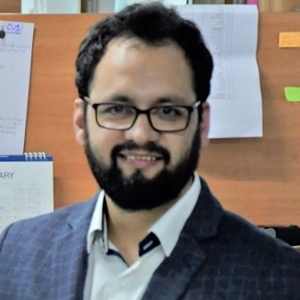
Mr Gazi Hassan
Research Scholar, International Relations
Centre for Public Policy Research
Gazi Hassan is a Research Scholar of International Politics. He has an MPhil in International Studies from MMAJ Academy of International Studies in Jamia Millia Islamia University, New Delhi. Was previously associated as a Senior Research Associate with CPPR- Centre for Strategic Studies. Mr. Hassan’s research focuses on the Indo-Pacific, particularly exploring geopolitical dynamics, developments related to trade, terrorism, the role of various actors and including the security dynamics of the region. He has also worked as a researcher at the Vivekananda International Foundation, New Delhi and has been contributing articles to SADF (Brussels) and various online platforms like Foreign Policy News (US), The Quint (New Delhi), among many others.