
Course Description:
Indo-Pacific is a geopolitical term coined to denote the Pacific Ocean and the Indian Ocean region. While the region comprises 40 nations, for this course we will be mainly focusing on India, China and other South East Nations predominantly due to the weight these countries carry at present in the geopolitical landscape of the Indo Pacific region. The Indo-Pacific has transformed into a critical strategic theatre best understood from the Global South perspective as it is the most populous, economically and resource-wise rich region. It also is the region wherein the majority of the world’s trade takes place making it more quintessential to be discussed and understood from an Asian, more specifically Indian perspective.
While most of us read and learn about Indo-Pacific from the conventional perspective because the term and the region was given its due nearly a decade ago by players like America, our course is geared towards filling the gaps the Western narrative has missed out on by holding unconventional sessions.
India and the ‘Global South’ in the Indo-Pacific – Online Certificate course is aimed at providing youngsters and mid-career professionals the opportunity to learn, discuss, interact, and deliberate on matters critical to nations in the Indo-Pacific while unlearning any biases we have surrounding the region itself. It will deepen the understanding behind the inception of these terms, the historic ties shared by nations in the region, the cultural similarities, trade and economic dependencies, security challenges and future prospects.
Course Objectives:
- The course will expand IR students, professionals and enthusiasts understanding of Indo Pacific region from a completely different perspective than what is currently being taught
- It is aimed at developing conversation Indo Pacific from an Indian perspective
- Global south has been a point of discourse around various forums, the course will bring out the geopolitical and geostrategic relevance in the Indo Pacific region
- Altering the myopic view around Indo Pacific which currently is dominated by information shared by major Western economies
- Setting the stage to build a more robust dialogue around nations of the global south and their role in the Indo Pacific region
- Demystifying the labyrinth presented by the present trade routes within this region against the geopolitical changes underway
- Creating an interactive platform between youngsters and subject matter experts
- Deliberate on real time happenings in the region with experts with international and national organisations working on the region
Course Module:
| Module | Instructor | Date
Time (TBD) |
Module 1: Introduction to the countries of the Global South in the Indo Pacific Region
|
Dr Vijay Sakhuja | 15th July
10 am to 12 : 30 pm (including 15 -20 mins break) |
Module 2: Political Dynamics : From Indo to Pacific
|
Dr Lawrence Prabhakar | 22nd July
10 am to 12 : 30 pm (including 15 -20 mins break) |
Module 3: Economic Growth and Trade
|
Dr R P Pradhan | 23rd July
10 am to 12 : 30 pm (including 15 -20 mins break) |
Module 4: Security Architecture in the Global South (Asiatic region) of the Indo Pacific
|
V Adm Muralidharan | 29th July
10 am to 12 : 30 pm (including 15 -20 mins break) |
Module 5: Future Prospects and Challenges
|
Dr Vijay Sakhuja | 30th July
10 am to 12 : 30 pm (including 15 -20 mins break) |
Course Delivery:
The course will be delivered through a combination of lectures, presentations, and interactive discussions. Participants will have the opportunity to engage in Q&A sessions and group activities to enhance their understanding and critical thinking about the topics covered.
Target Audience:
- Students and academics interested in international relations, global politics, and economic development
- Students interested in research work around foreign policy, international trade and Indo Pacific
- Professionals working in international organisations, NGOs, or businesses with a focus on the Indo-Pacific region
- Anyone with a general interest in understanding the dynamics and complexities of this rapidly evolving region
By the end of the course, participants will have a comprehensive understanding of the growth of the Global South from an Indian perspective, in the Indo-Pacific, its implications on global affairs, and the opportunities & challenges it presents in the future.
Our Instructors
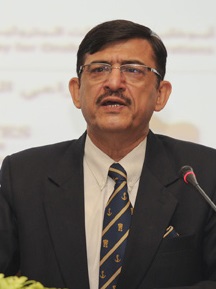 Dr Vijay Sakhuja
He is a former Director, National Maritime Foundation, New Delhi. A former Indian Navy officer, Vijay Sakhuja received MPhil and PhD degrees from the Jawaharlal Nehru University in New Delhi. He has published over 40 books, edited volumes and monographs, and specializes in issues of national security and public policy, particularly in the context of ocean affairs, geopolitics, Climate Change, Arctic, Blue Economy and 4th Industrial Revolution Technologies. He has been on the research faculty of institutions like RSIS, ICWA, ORF and IDSA and is currently associated with Cambodia Institute for Cooperation and Peace, The Peninsula Foundation, India Strategic and Kalinga Foundation.
Dr Vijay Sakhuja is a member of the international editorial board of Journal of Indian Ocean Region (Taylor & Francis) and Journal of Greater Mekong Studies. He regularly teaches and lectures at defence and civil universities and colleges in India and overseas.
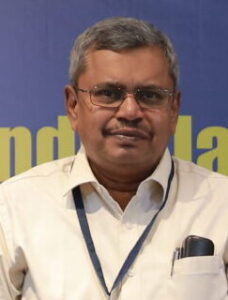 Dr W Lawrence S Prabhakar
He is an Author, Researcher & Professor, International Relations & Strategic Studies, Formerly with the Department of Political Science, Madras Christian College. His books are Growth of Naval Power in the Indian Ocean Region: Dynamics and Transformation (2016), The Maritime Balance of Power in the Asia-Pacific: Maritime Doctrines and Nuclear Weapons At Sea (2006), Maritime Security in the Indian Ocean Region: Critical Issues of Debate (2008). His research fellowships have been at IDSS & RSIS Nanyang Technological University, Singapore (2004-07); The Fulbright Fellowship at University of Michigan Ann Arbor (1996); Policy Research Fellowships at The Henry Stimson Center, Washington DC (2001) & Center for Naval Analysis ,USA (2001).
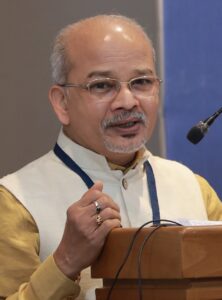 Dr R P Pradhan
He is a Professor at the Dept. of Humanities & Social Sciences, BITS Pilani, KK Birla Goa Campus. He is a PhD in International Relations and largely works on Political Economy. His current teaching and research focus involves International Relations; Migration & Labour Market; International Trade & Development; Development Economics; Maritime Studies & Blue Economy. Prof. Pradhan received the Roghelio Sinan Appreciation Award from the Embassy of Panama in 1997 and had served as an Expert Member for the Commonwealth Fellowship for Economics during 2006-10. He was Trustee (Governing Board Member) at the International Centre, Goa (ICG) for four years (2006-10), and has completed two ICSSR Major Projects. Apart from his publications and editorial responsibilities, Prof. Pradhan has delivered several invited lectures abroad in several European Universities and South East Asian Universities.
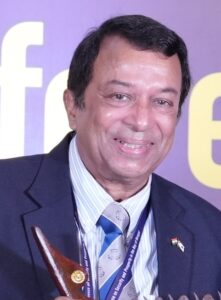 V Adm MP Muralidharan
Vice Admiral M P Muralidharan, retired in Feb 2013 as the 19th Director General of the Indian Coast Guard. A specialist in Navigation and Direction and a Post Graduate in Defence Studies, the Admiral in a career of close to four decades in the Indian Navy, has held several key Operational and Staff appointments including command of three warships. As Flag Officer he commanded Maharashtra and Gujarat Naval Area, was the first Commandant of the Indian Naval Academy and Chief of Personnel of the Navy. Post retirement, the Admiral was appointed as a Member of the Armed Forces Tribunal at its Regional Bench at Kochi, an appointment equivalent to a sitting Judge of a High Court. During his tenure of four years, the Admiral authored nearly 500 judgments. The Admiral, a keen student of Strategic and Defence related Issues with special focus on Maritime affairs, is a member of various strategic study societies and institutions. He is a regular contributor to professional journals and a speaker and panellist at various Seminars and Conferences.
Course Details
- Weekend sessions – starting from 14th July till 29th July
- Live online sessions – 10 hours in total
- Additionally – Reading material along with session recordings post course completion will be shared
- Registration details
- CPPR Alum – Rs 2500 (+ 18% GST)
- Student – Rs 4000 (+ 18% GST)
- Professionals – Rs 5000 ( +18% GST)