
INTRODUCTION
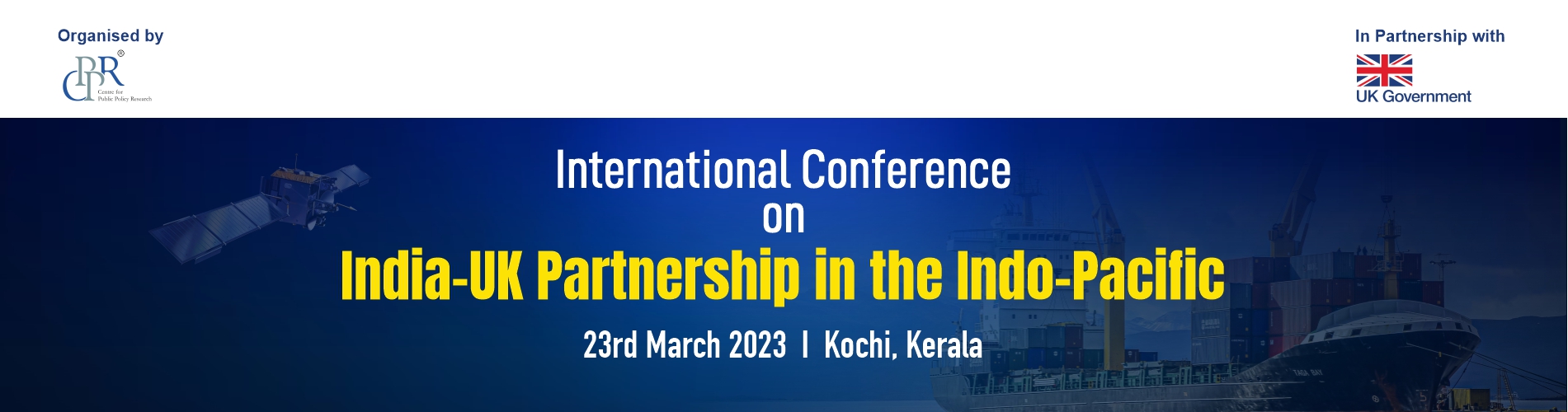
India and the United Kingdom (UK) have a long-standing relationship that has been further strengthened in recent years, especially in the context of the Indo-Pacific region. The UK government’s foreign and defence policies post-Brexit clearly underscore the fact. A strategy framework for attaining the UK’s national security and foreign policy goals up to 2025 was laid out in the UK government’s “Integrated review of security, defence, development, and foreign policy” (March 2021). This included giving the Indo-Pacific region diplomatic priority, or the so-called “Indo-Pacific tilt,” of the UK. The area was deemed crucial for the UK’s economy, security, and global ambition to support open societies. In this endeavour, the UK wishes to develop closer collaborations with India across a range of areas. India, the largest democracy in the world, was referred to as an international actor of growing importance. The integrated assessment outlined the United Kingdom’s goal for this improved partnership as one that includes commerce, investment, defence and security cooperation, and one which tackled issues such as climate change. The “tilt” towards the Indo-Pacific is part of the UK government’s diplomatic and defence policies. In a number of sectors, this includes forging tighter ties with India. A mutually agreed-upon framework for enhancing bilateral relationships by 2030 with the goal of creating a comprehensive strategic partnership frames the UK and Indian relations. The Indo-Pacific region, which stretches from the east coast of Africa to the western shores of the Americas, has become a major area of focus for both countries, as well as for other nations and international organizations. In recent years, India and the UK have increased their engagement in the Indo-Pacific, recognizing the region’s growing importance as a centre of economic and strategic power. Both countries have expressed a commitment to promoting stability, security, and prosperity in the region and have taken steps to deepen their cooperation in a range of areas, including defence, trade, and maritime security.



Britain’s tilt towards the Indo-Pacific is an encouraging sign for India. Both countries have similar aspirations and interests for the region. Britain continues to be the leading contributor to Euro-Atlantic security. Further, the UK’s commitments are mostly in the Pacific while India’s primary region of interest is the Indian Ocean region. In its new global role in the Indo-Pacific, Britain’s strategic role in the region in collaboration with India needs further deliberation and ideation. The UK can sure





Collaboration on non-traditional security threats can spur the development of stronger alliances in the Indo-Pacific region. The UK and India can play a significant role in addressing challenges posed by non-traditional security threats. The countries can work together on a range of issues such as:
- Strengthening cooperation in the areas of cybersecurity, disaster management, and climate change adaptation and mitigation.
- Improving cooperation to combat transnational crime, including drug trafficking, human trafficking, and money laundering.
- Enhancing collaboration to counter terrorism and extremism through intelligence sharing, capacity building, and joint operations.
- Concentrating on ensuring the region’s water and food security, notably by promoting sustainable farming and water management methods.




India and the United Kingdom (UK) are both members of the G20 and are actively engaged in promoting sustainable ocean governance through the G20 platform. India’s G20 Presidency also makes matters more vibrant and significant. In the G20’s efforts to advance sustainable ocean governance, India and the UK play significant roles. Their cooperation and leadership in this area can contribute to ensuring the long-term health and productivity of the oceans around the world. Both India and the UK have made a point of highlighting the value of international cooperation in solving issues linked to the oceans, such as overfishing, plastic pollution, and the effects of climate change on the oceans, as part of their efforts in the G20.




Indo-Pacific has become a hotbed of great power contestation in the last decade or so. With plurilateral and multilateral mechanisms that configure traditional powers and emergent powers, the region offers an important opportunity to understand great power politics in the context of the rising influence of China and its implications in the Indo-Pacific. Areas of cooperation amongst stakeholder democracies have become diversified in the region. Power contestation in the region also takes the mantle of nontraditional security sectors including vaccine diplomacy as well as newer arenas of traditional security such as cyber warfare.

The 2030 Roadmap for India-UK future relations is an encouraging sign. The roadmap, which addresses all facets of UK-India relations, would guide cooperation for ten years. In order to track its execution, it would also be discussed at an annual strategy review meeting. The roadmap included the launch of an enhanced trade partnership and the negotiation of an FTA between India and the UK. The trade deal is also seen as vital for the UK’s strategy of tilting towards the Indo-pacific. India and the UK have sought to deepen their economic cooperation in the Indo-Pacific region, including through increased trade and investment. Both countries have emphasised the importance of promoting an open and rules-based economic system in the Indo-Pacific. They have sought to increase their collaboration on economic initiatives, such as digital trade and sustainable infrastructure development.





write to us : [email protected]